Sunflowers – not very successful

One of the ideas i wanted to try out for feeding our chickens was sunflower seeds. People told me they are very easy to grow. So, back on June 16, i planted 15m of sunflowers (3 rows of 5m each). I dug troughs in the ground, filled them with compost, put plenty of soaked sunflower seeds in the ground, then thinned them as they grew. They grew up quickly, made beautiful flowers, then at 3 months of age, they drooped and turned dark. Finally yesterday i gathered the heads. The biggest one (below) wasn’t too big.
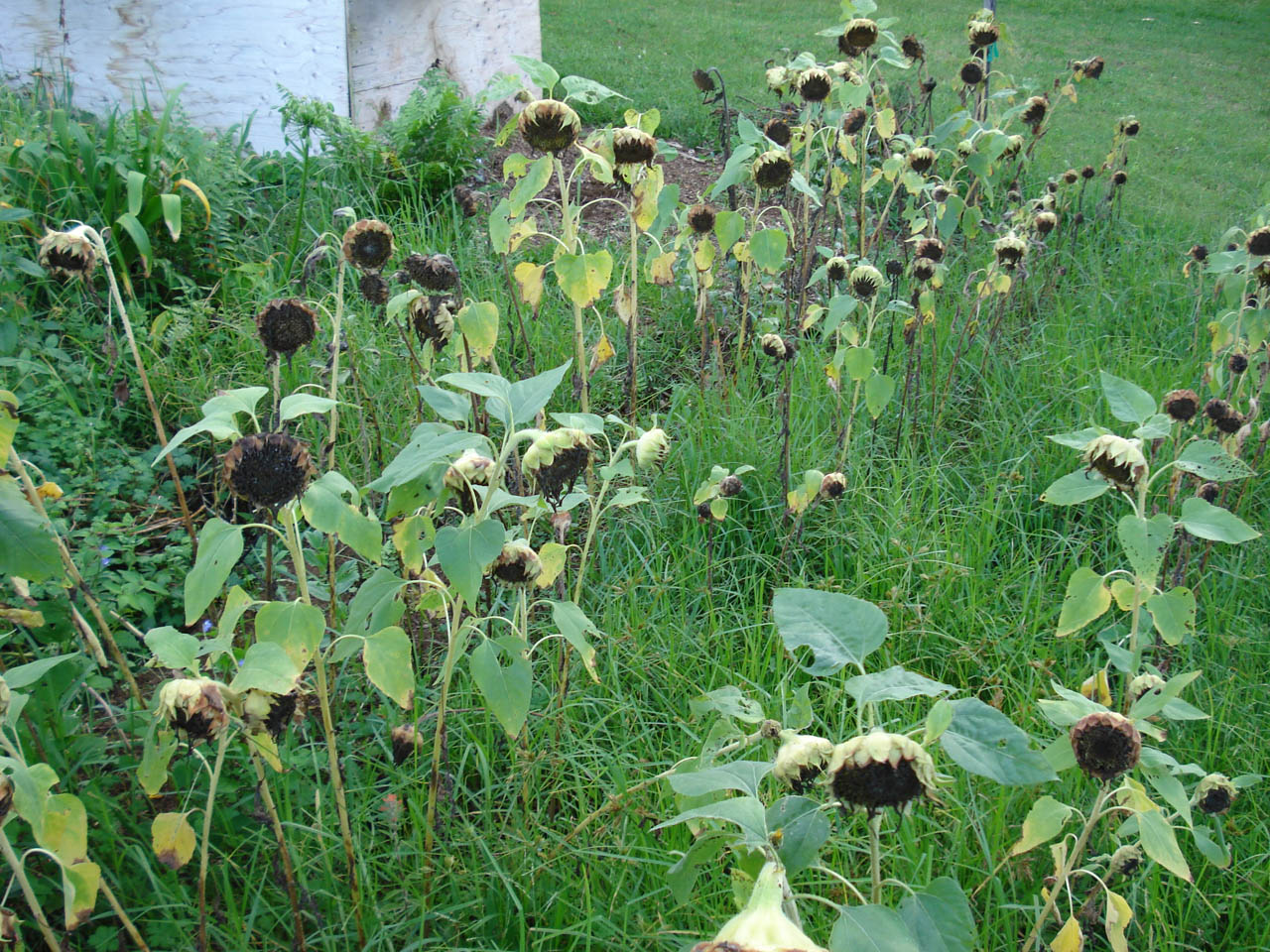
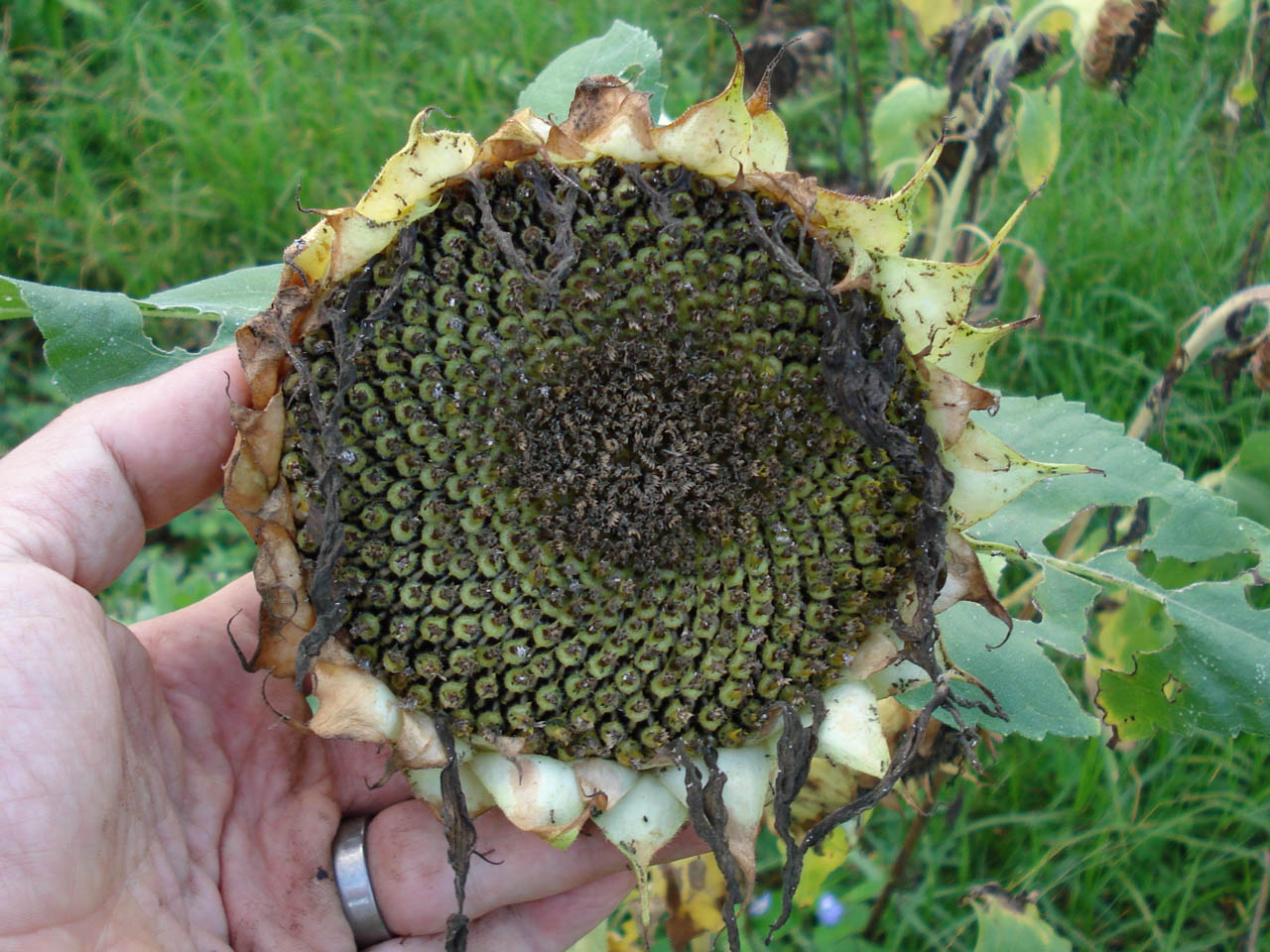
Most of the heads are small and immature. Trying to get seeds out of them, there are only a few usable seeds at the outer edge:
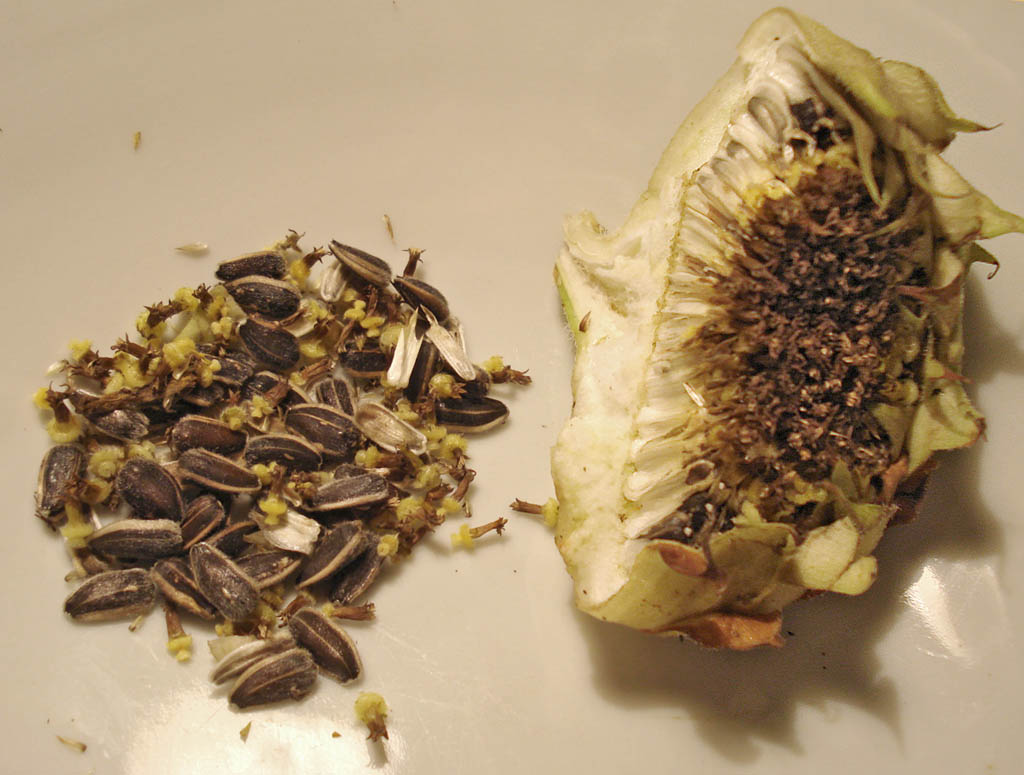
I suspect that my batch of sunflowers will barely produce enough seeds to replant the same rows. (Online resources say that i must wait until the heads are completely dried out before collecting the seeds. Otherwise, they are hard to remove. So, i won’t know how many seeds i got until later.)

This was not too successful as a way to grow chicken feed. If i tried it again, perhaps i could:

  • Use different seeds? These were just random seeds bought as food.
  • Plant earlier? Perhaps they will like April and May better.
  • More fertilizer? The roots seem shallow and i did give them some rich compost, but i could try more.
Benikaori cuttings

Last night a got a call from Takahiro saying he had a few tea cuttings for me, from his own plants! This is really wonderful and unexpected. I quickly dashed over to pick them up, and he told me a little about the cultivar, Benikaori.

I had tried looking for any information about it online, but found none. The USDA Tea pamphlet says only “in Japan [..] used for black tea production”. That’s mysterious, as Japan does not drink black tea – why would they grow it? Takahiro explained that after WWII, when Japan was economically devastated and looking for things they could export, ‘Benikaori’ was developed as a cultivar that could be grown in Japan and made into good black tea for export. It’s still pretty mysterious how it ended up being grown in Hawai’i (which has a really different climate).

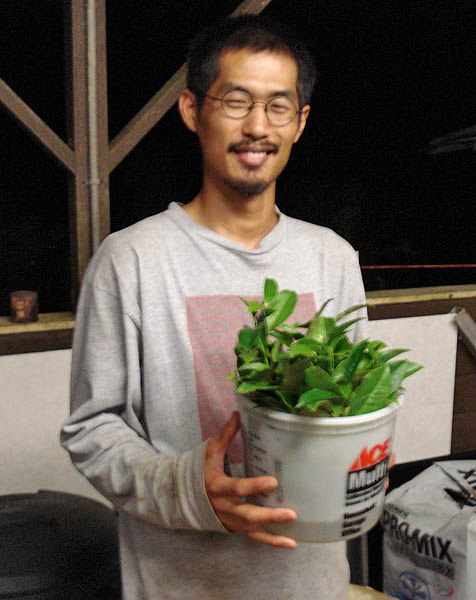
In any case, Takahiro gave me a bucket:
I managed to get 86 cuttings from that little bucket! He said that even cuttings from the totally green tips of the plant can sometimes root, so i extracted every bit of material i possibly could.

Ophelia & company

I call our hens “Valentine Day Chicks” because our box / bundle of joy (all 52 o’chicks) arrived the week of Valentine’s Day, 2006 from McMurray’s Hatchery. That week, Ben was away on Oahu for a business trip. I was rearing 52 hungry baby chicks based solely on Gail Damerow’s “A GUIDE TO RAISING CHICKENS”. I sure was anxious. What if a rabid mongoose ate my little plump darlings? What if a stray ferocious feline ripped off their downy peeping heads? What if some freak Kona wind blew down their coop? Fortunately, nothing dramatic happened. So, the hens are now at 31 weeks old. Ben and I have successfully managed to raised a variety of 45 plump, happy hens. I am proud to say we are the only people on the Big Island of Hawaii to provide organic feed to our flock.

Ophelia

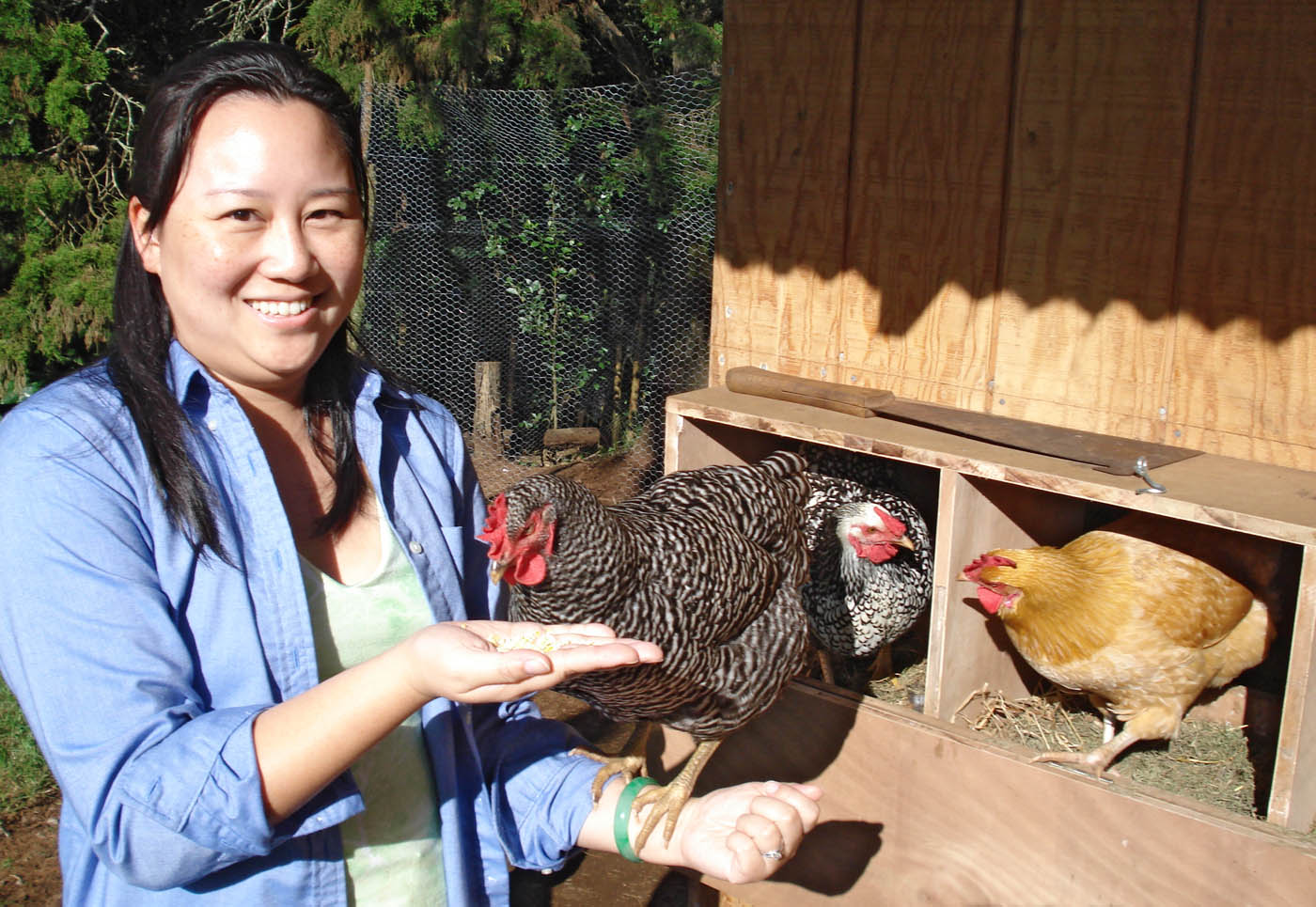
Over the last three months, one particular Plymouth Barred Rock hen who I named Ophelia bonded with me. She knows she can usually find some scratch [cracked corn] from me if she leaped up onto my outstretched arm. She’s on my left arm snacking on some scratch. Ophelia’s earned her keep as a tame, egg-laying hen. Ophelia is the one hen tame enough to leap three feet from the ground onto me. I can pick her out of the whole flock because she has two distinctive markings: one completely black feather on her chest and one on her back. I’ve examined this anamoly and found the two feathers have no barring [black and white] stripes at all.

I’ve spent a lot of time in “Hen Zen” with my 45 hens because I wanted tame birds. Monst of ’em will eat right out of the palm of my hand. Heck, if my palm were made of fresh corn, I’m certain they will devour it. I happy I’m not allergic to chickens.

In the nest box behind me which my step-father-in-law [a.k.a. yoga guru], Jimmy constructed, you’ll see two chickens. On the left of the nest box is a silver-laced Wyandotte conferring with a buff Oprington, plotting their next move. “How we gonna get summat dat scratch from that two-legged human?” Will they become tame enough to attempt to jump on my outstretched arm? Perhaps, one fine day.

Tea pictures

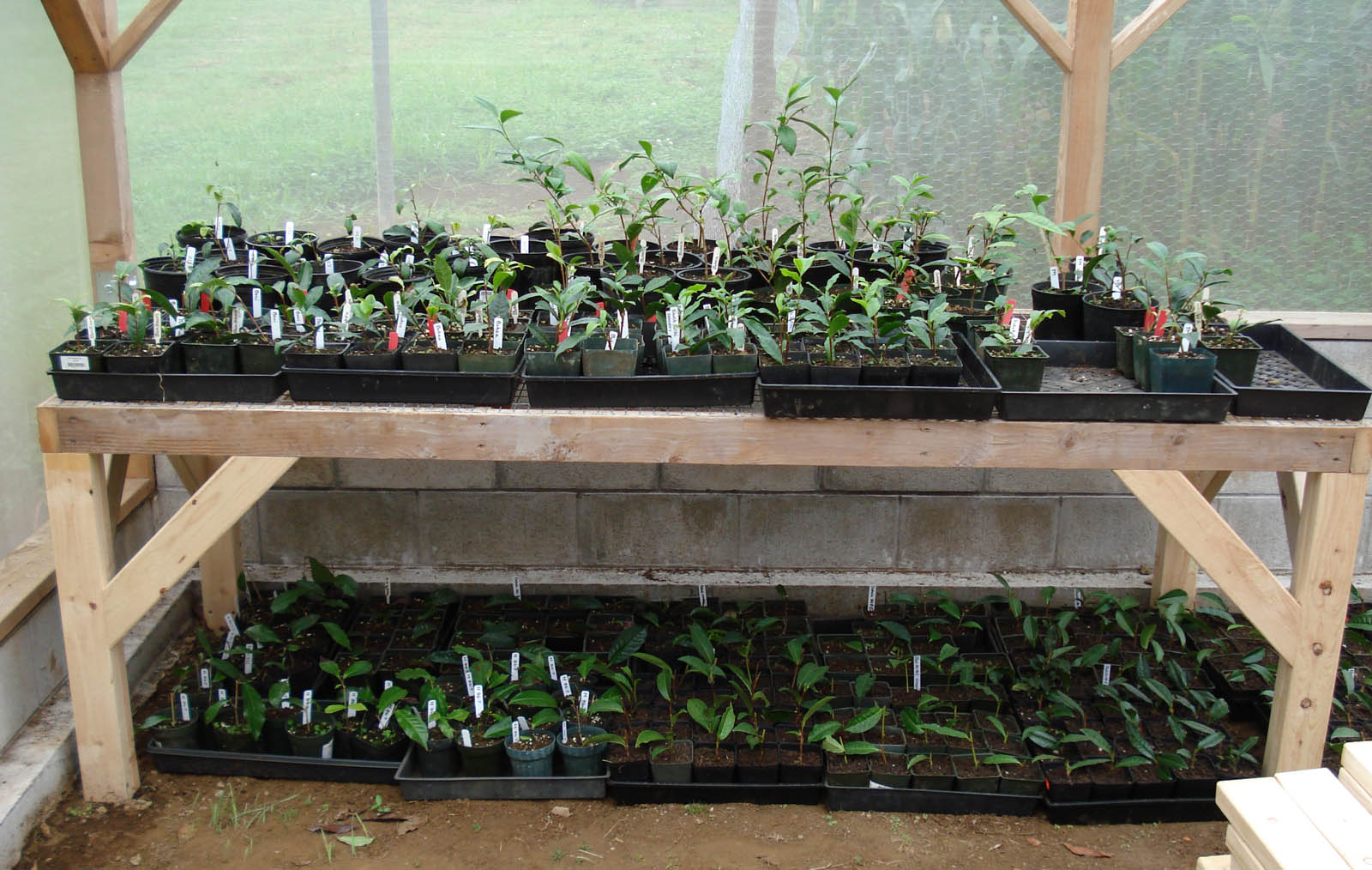
Here’s a snapshot of all our little plants. The ones on the table are rooted, and the cuttings that haven’t rooted yet are under the table where it’s nice and shady:

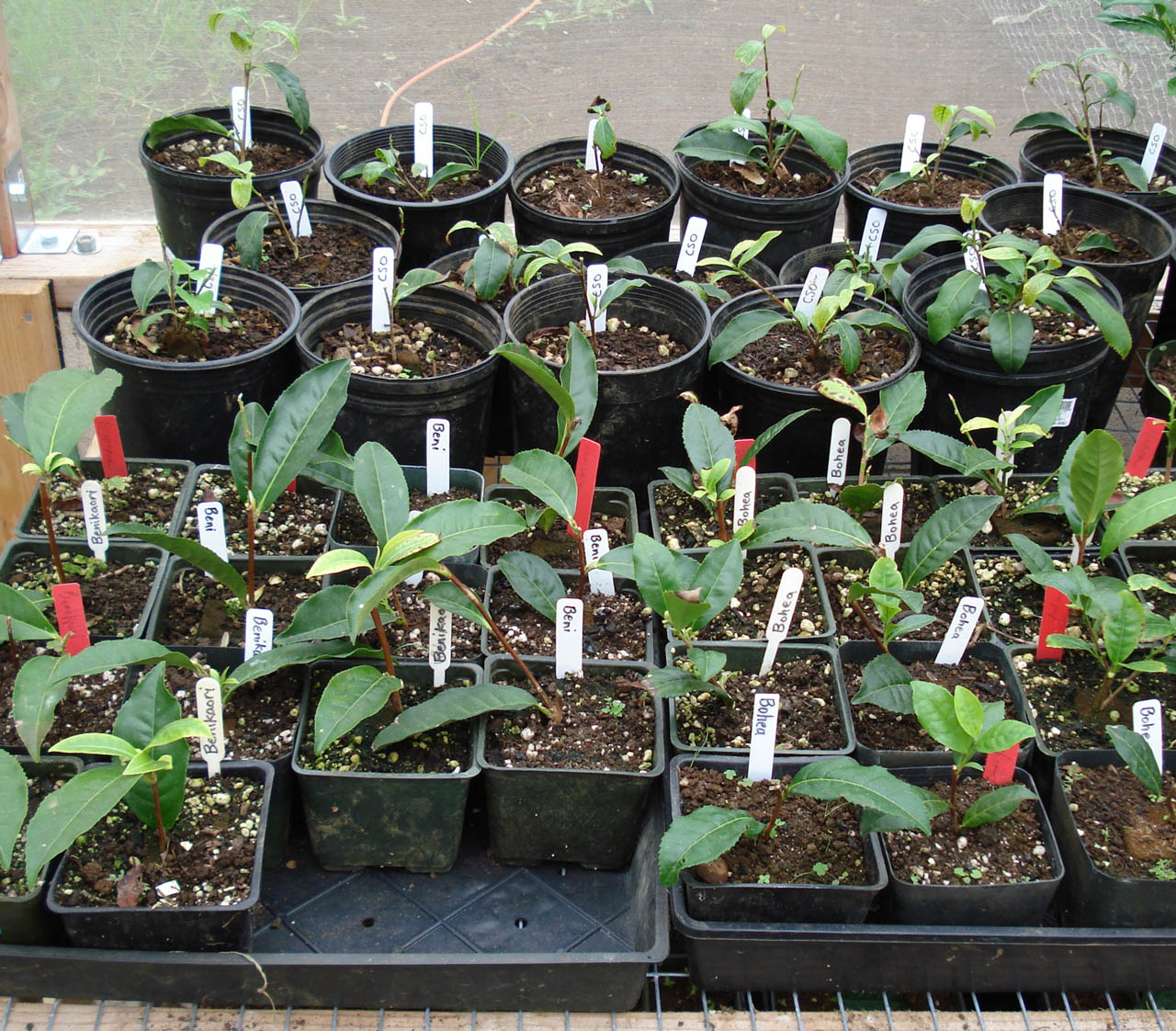
And a closeup showing how the CSOs (in the back) aren’t doing as well as the other, younger plants:

Potting

Today was another good day of potting. Jim went to Hilo and picked up 200 more little pots for me ($.20 each at Garden Exchange, they fit 5×5 to a tray). I made 36 more cuttings from Eliah’s plants. All my cuttings are still a long way from rooting, though.

I did a count. Here is how many little plants of each tea cultivar that we’ve got actually growing:

Benikaori 15, Bohea 39, CSO 16, Yabukita 29, Yutaka Midori 13, Assam 1

That’s 113 plants, although many of them probably won’t make it. The CSO in particular are just clinging to life even though it’s been 8 months since they rooted.

Brand new blog

Here it is, the very first test of our new farm blog. Lots of tea news today, but let’s see if it works first before getting too carried away.

For those of you here for the first time, some basic explanation.  We live in Ahualoa, Hawai’i, on a few acres of land.  We’ve got 45 chickens which produce a lot of eggs, and we’re trying to start a tea plantation.