First successful cuttings!

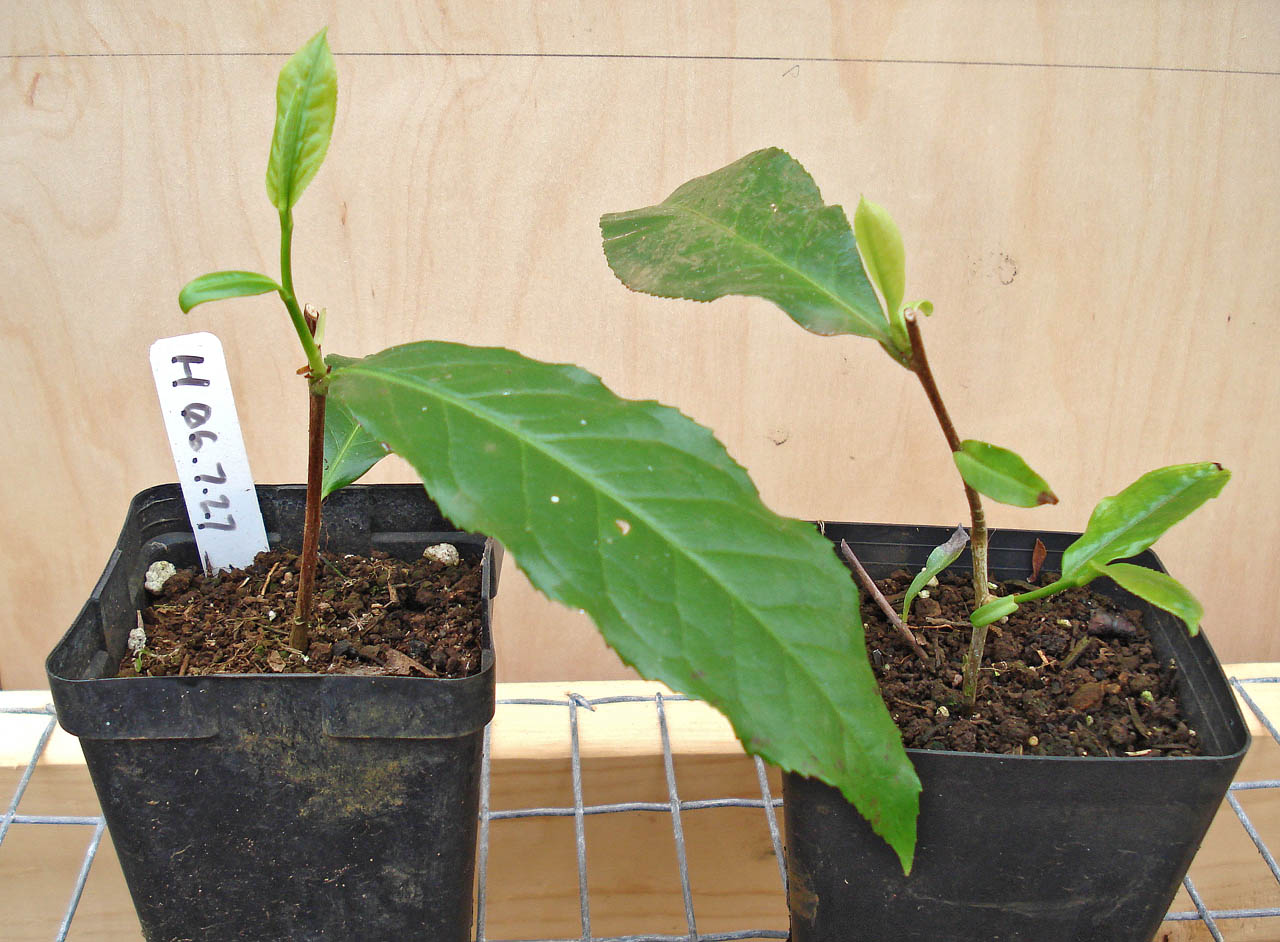
Here they are. I know it may not look like much, but this is the very first time that cuttings i’ve made have unmistakably rooted and grown new leaves:

These two are from the batch of 30 cuttings i gathered in July from an old abandoned Japanese homestead nearby. The source plants were spindly, up to 3-4m tall, growing very slowly in the shade of cathedral-sized bamboo canopy. I’m guessing that these tea plants were planted long ago (perhaps early 20th century) by first-generation Japanese, so they might in fact be a ‘good’ cultivar. At the very least, theyve proven themselves to survive decades of neglect in our soil and climate here.

Of the 433 cuttings i have made so far from 4 different sources, around 80% are still going (meaning, they have not yet turned brown and died, nor have they put out new leaves.) The bulk of these cuttings are from ‘unknown’ plants, so they would not interest the tea purist, but perhaps some day (years from now..) they will turn out great.

Yacon!

Recently i’ve discovered a fascinating crop to try growing here. Yacon (prononuced yah-kohn) is a South American tuber, a “lost food” of the Incas. It’s a relative of the sunflower, grows to 2m tall, almost completely pest- and disease-free. Yacon produces a bunch of delicious roots which look something like a yam but you can eat them raw, and they taste like a crisp, mildly sweet pear or apple. The sweetness comes from fructo-oligosaccharides so although it’s tasty, it has no calories. Here are some good links about yacon: the Wikipedia page, an article on the Seeds of Change newsletter, on Plants For A Future and Mother Earth News article about the Yummy Yacon.

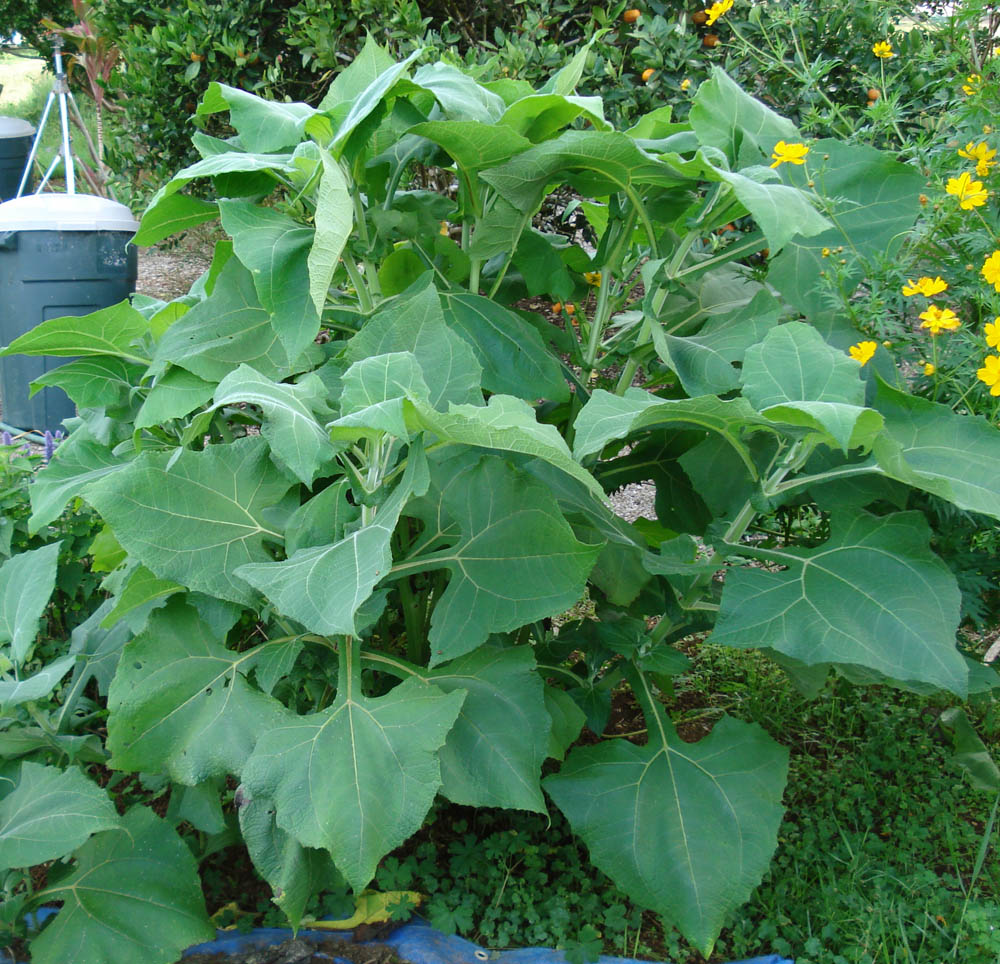
A few weeks ago our friend Liza and Josh gave us a couple yacon plants in pots. I planted them in the ground at the edge of the garden and they almost immediately grew into big, happy plants, as tall as a person:

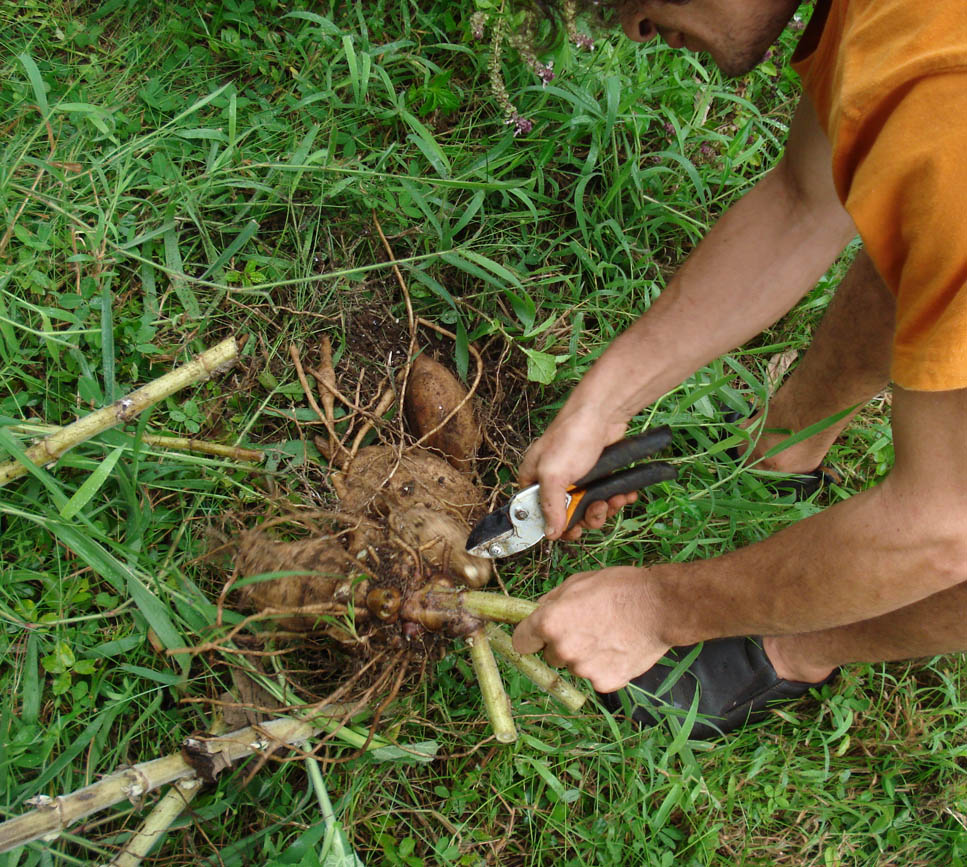
Yesterday, on the way back from picking up our Organic Chicken Feed in Laupahoehoe, i stopped by Liza and Josh’s place, and Josh harvested several yacon plants to give me the root-buds for propagating. (Curled around around one of the tubers was a huge scary centipede, another reason i’m happy we live up at a high elevation, where centipedes don’t like it!) Here are pictures of the harvest, the root-buds, and the result: 20 pots of yacon starts:

40 Benikaori, 4 Bohea, 2 Yabukita

On Saturday we went to Hilo and picked up another batch of USDA cuttings.  This time it was mostly Benikaori, which is something of an odd cultivar to grow in Hawai’i, as described in my previous post Benikaori cuttings.  In any case, i’m happy to try growing them, and maybe they’ll make some really good black tea someday.

Meanwhile, i’ve been re-potting a lot of my older Yabukita plants from small to medium pots.  The batch of Yabus from September is really taking off!  It’s nice to see something beside Bohea growing well.

40 Yabukita, 8 Chin Shin Oolong

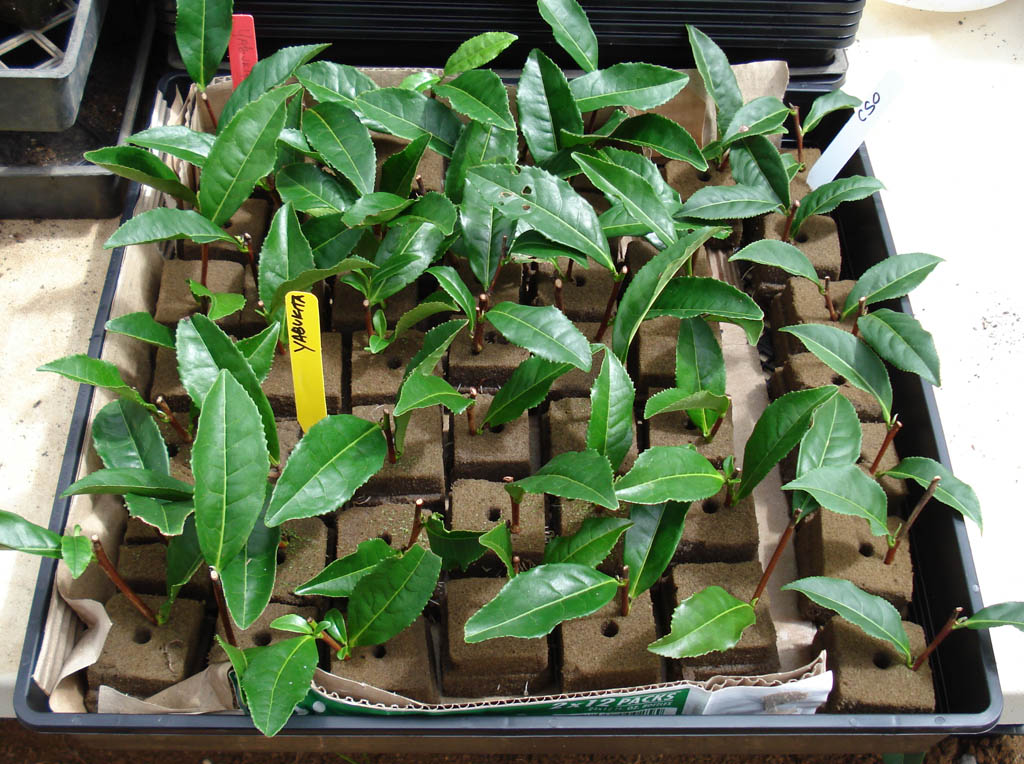
Jim went to Hilo this morning and picked up another batch of rooted tea cuttings, from the USDA, rooted by Aileen Yeh. Look how pretty they are! So green and strong and healthy. Aileen does great nursery work.Yabukita and Chin Shin Oolong rooted cuttings The ones on the left are CSO, which are a special kind from Taiwan which is more difficult to grow but makes an Oolong with a good reputation. You can see the leaves are smaller, less shiny, and more bluish:

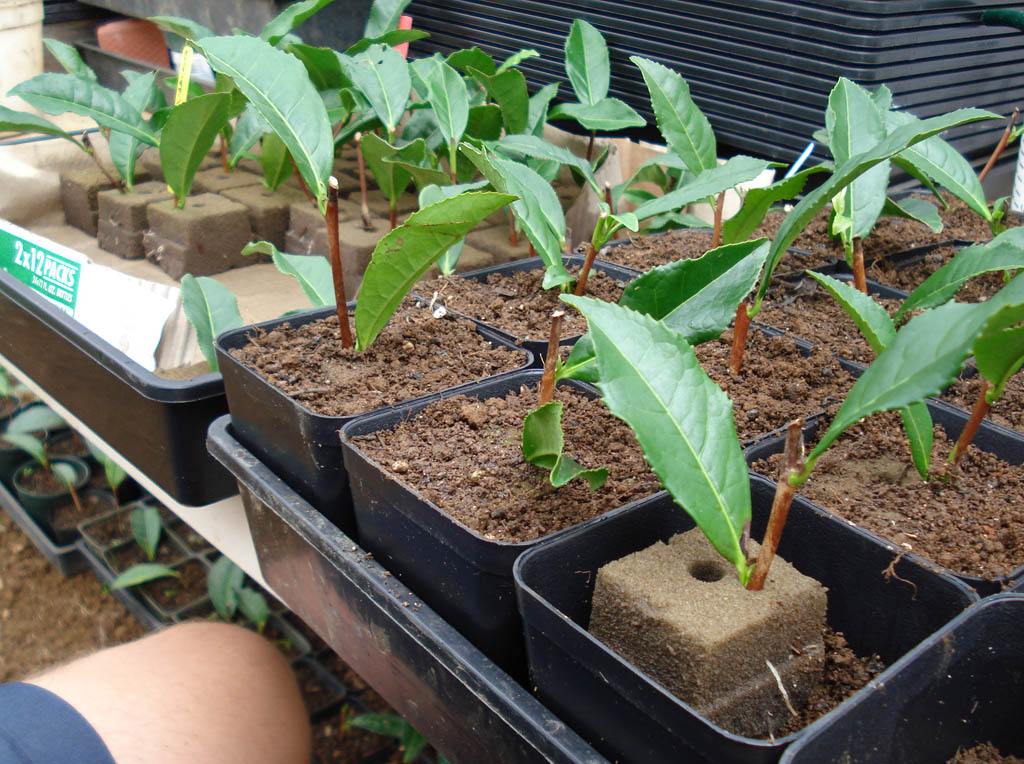
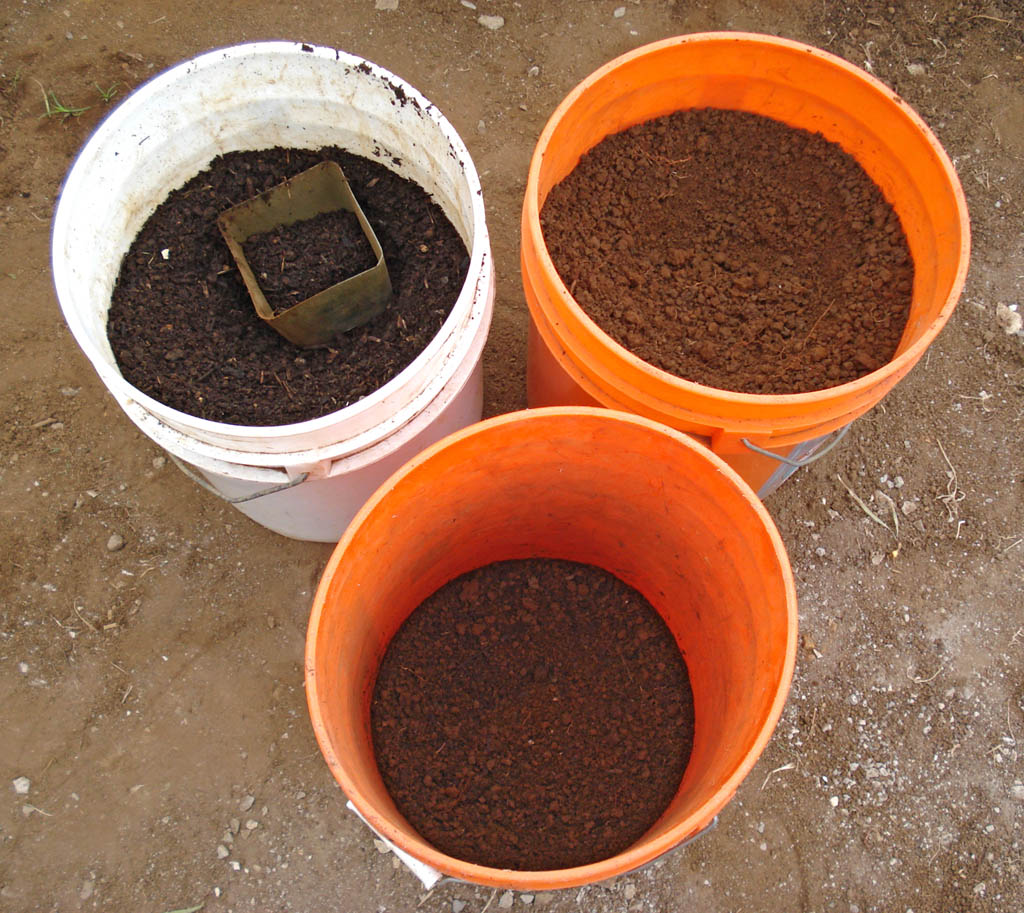
They are delivered in little sponge cubes. There is a lot of different (conflicting) information about what potting soil to use for tea. The Indian textbook (Tea Cultivation : Comprehensive Treatise) says to use the “clean subsoil” of the site they will be eventually planted. The nursery professionals say to use normal commercial potting mix. Other people caution against using rich soil, apparently the little plants do better if they have to work harder! Here in Ahualoa we have acidic soil (which supposedly the tea likes) with very little nutrients. I just can’t see using this soil directly, so i mix it with some of our rich dark home-made compost. I used to mix 1:1, now i mix 1:2 compost:soil. The buckets have, top left: our compost, top right: our local redish acidic clay soil, bottom: the mix.

Big Quake of October 2006

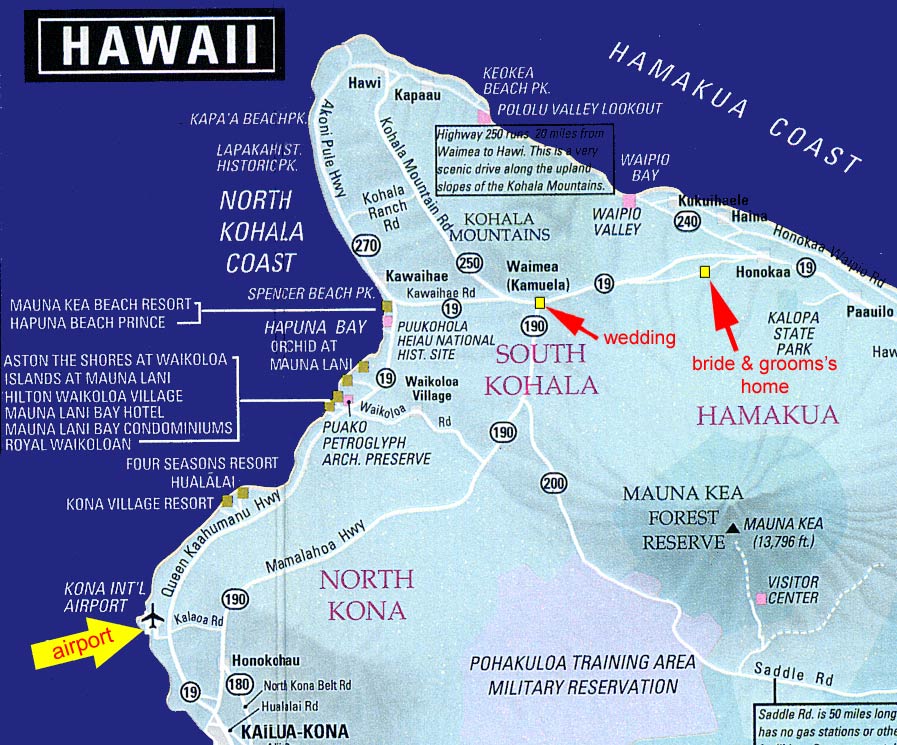
The earthquake occured on our island, the Big Island of Hawaii. The reported epicenter was about 40 minutes away from my door by car, on the dry side of Big Island. Here’s a map to give you an idea where the earthquake happened [yellow arrow ‘airport’] and were I live in Ahualoa [‘red arrow bride & grooms home’]

After I have been through the harrowing days after 9/11/2001, NYC blackout of August 2003 and Earthquake of October 2006 I’m doing okay.

Ben and I were in bed sleeping very contently and at 7.08AM HST it felt and sounded like several NYC subway trains ran over the roof of the bedroom (except without the brakes and all.) Ben was excited about the earthquake “Whoo hooo!, An earthquake!” My first reaction was, “Oh no! I hope my chickens are okay!”  I was a little shaken (but not stirred) up. One carry-on suitcase leapt from a tall shelf and several BOS origami magazines slid off the bookcase in my bedroom. Nothing else was damaged in the bedroom. It was a rare sunny & hot day in Ahualoa. Usually by 11AM the mountain clouds roll in and overcast our area. Thank goodness it was a fair day across the island for the cleanup to happen.

Ben & I surveyed the damage in the rest of the house […and…] went around on foot to survey the damage at our neighbors’ house. Our household was very lucky — some of our neighbors’ house was completely trashed, valuable collectibles broken and house foundations shifted.

I calmed down after a large cup of hot ginger tea with plenty of demerrara sugar. I went to visit my hens. I picked up one buff Orpington hen, Big Buff. She decided to mellow out on my lap for about 10 minutes. This chicken was so chill that she lay sideways an my lap. I felt alright after that, like she was calming _me_ down. [She’s the hen pictured on the blog banner on top of this page.] Our 45 hens were a wee bit mellow after the quake but resumed their frenetic squawking and cackling that precedes and post-cedes all morning egg laying activities. (We ate the roosters several months ago). I felt utterly exhausted from cleaning up. Ben & I took a long nap mid-day. I did not want to drive around out on the roads; we did not need to stock up on rice or T.P. I awoke because Ben told me my friend, Deanna Zandt, in NYC called to check up on me.

All throughout the day, I felt little earthquake aftershocks. We had people call here and check in and we call folks to reassure them that we were okay. Late afternoon I decided to take advantage of the daylight and fold Yoshio TSUDA’s ‘Scops Owl‘ published in Tanteidan Magazine #98 from 10″ kami and 22″ European gold Kraft paper. I promised to fold one for the Origami USA‘s Holiday Tree at the American Museum of Natural History. Ben suffered a severe headache late afternoon to take a couple of aspirin. Ben’s the kind of person who will not take medications in most circumstances. He was experiencing caffeine withdrawal symptoms. No power, no way to grind the coffee beans, hence, big headache.

We decided to prepare pesto pasta & garlic bread for dinner. The power was still down around late day so we had to figure out stovetop cooking. Boiling water for pasta? Check! Garlic press and butter for garlic bread? check! Broiler for toasting the bread? Ooops… no way we can “turn on” the broiler because it’s controlled by an electronic unit instead of a manual knob! No problem! Ben manned two big skillet to “pan-toast” the garlic bread. It’s dinnertime and still no power, so we light the tall pillars of candle for our dinner. How sweet: me, Ben and Jim eating pasta by flickering candlelight. Jim puts out a request to the universe “HELCO [Hawaii ELectric COmpany] give us some lights!” ..And wouldn’t you know it, around 6.30PM I saw a dim light on the living room wall— the TV displayed “Acquiring Signal” which meant that Direct TV was re-booting. Wha-hoo! We have light! Jim’s prayer got answered. I turned on the dining room light and blew out the candles.

The first thing that Ben did after power was on was grind his beans for a cuppa joe! He was ecstatic.
NYT Kung Fu Tea article

Deb came across a very cool, short New York Times article: ‘From a Long Tradition, Small Sips Quickly Brewed.‘. Unfortunately, it’s not fully online unless you’re NYT subscriber, so i dug around to find another blogger who quoted the full article. The author Harris Salat has an entry on his blog “He ate well” with the pictures.

It would be great to produce some tea someday that deserves such a passionate brewing.

Fava Beans – no luck

We’re trying to find any alternative to importing chicken feed from the mainland. Mainly, i’m trying to find anything i can grow here in Ahualoa that can be fed to chickens!
Besides sunflowers, my other experimental crop this year was fava beans. I had found some online reference saying that in some places, they are grown as chicken feed. And, supposedly, the climate here (wet, and never gets too hot) would be OK. So, back on May 25, i planted a 9m row of favas along the edge of the lower garden. On June 10, i planted a second row of 5m along the upper garden.

They didn’t do too well 🙁 They grew slowly, got blown over often by the wind, were attacked repeatedly by aphids, and often died back (then shot up new shoots from their base). Here’s a picture of the lower row, today, and a closeup of the healthiest plants:

Even at 3 months old, they are not showing any signs of producing beans. They appear to be using their energy just to stay alive. The tallest are barely 3′ high. The row in the upper garden did even worse:

Today i sadly put the upper row out of its misery by pulling it up for compost.

Considering that we grow all sorts of other vegetables here very well (chard, kale, cabbages, lettuce, string beans, soybeans, corn, carrots, beets, much more) there must be something about the fava beans that just wasn’t happy. Alas.

Lawn, right or wrong

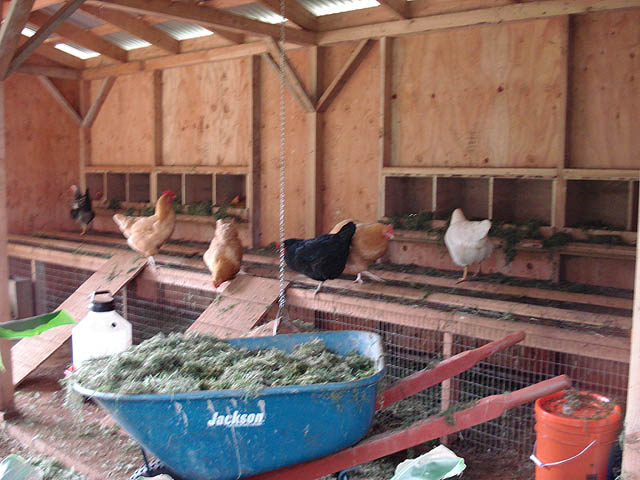
Recently i mowed the lawn and gathered the cut grass. Cut grass is useful, both as bedding that makes the chicken coop smell nice, and as a green matter input to the compost pipeline. This makes for happy chickens and nice organic compost for our eventual tea plantation:


Now, there are many people that say a lawn is a terrible thing, and they’re mostly right. A quick web search turns up “green lawns have to be maintained through use of chemicals that can pollute the groundwater and kill beneficial plants and insects; Americans spent $17.4 billion a year on their lawns; it the largest irrigated crop in the United States, consuming 50-70 percent of U.S. residential water…” You get the idea.

Well, those folks aren’t talking about the Wet Side of the Island of Hawaii! Here, lawn is not a foolish waste of environmental resources. It is a defense tactic against the ever-incroaching wall of Kikuyu grass (brought to Hawaii from Africa by cattle ranchers), which rapidly grows to several feet high, making land impassible and unusable. A lawn here consumes no chemicals and no water. However, mowing it provides a very large quantity of useful cut grass.