“Fuzzyfoot,” or our Light Brahma Hen

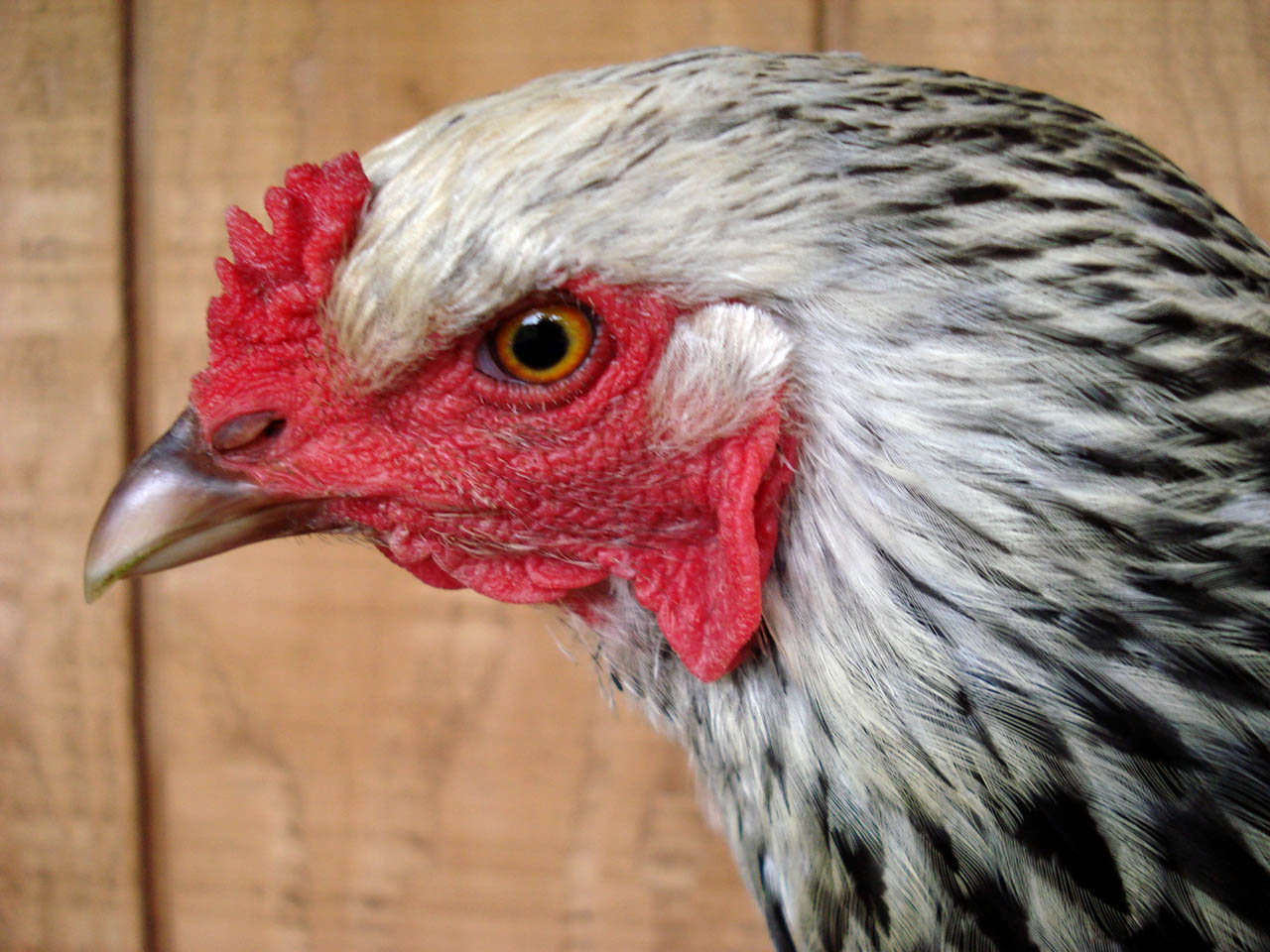
Where's my cracked corn? Meet “Fuzzyfoot,” a unique hen amongst our motley crew of 45 friendly, gregarious and sometimes neurotic hens. Sometimes I’ve called her “Alaska” because she’s got enough fluffy feathers for whole ‘nother hen. This fluffy hen is a dual-purpose breed called Light Brahma. She has a very docile temperment and lays light brown eggs. She is quite hefty for a bird her size. She has beautiful white plumage accented with layers of black feathers around her neck and tail. There is very fine white feathering around the fringe of the black feathers. You’ll see it more in detail in the photo at the bottom of this blog.

She takes care to nourish her body and the forming egg within her and eats little bits of crushed oyster shells to ensure she lays strong egg shells. I have observed that she will not fight with other hens for food. She will wait for the action to settle down and leisurely take her time to eat.

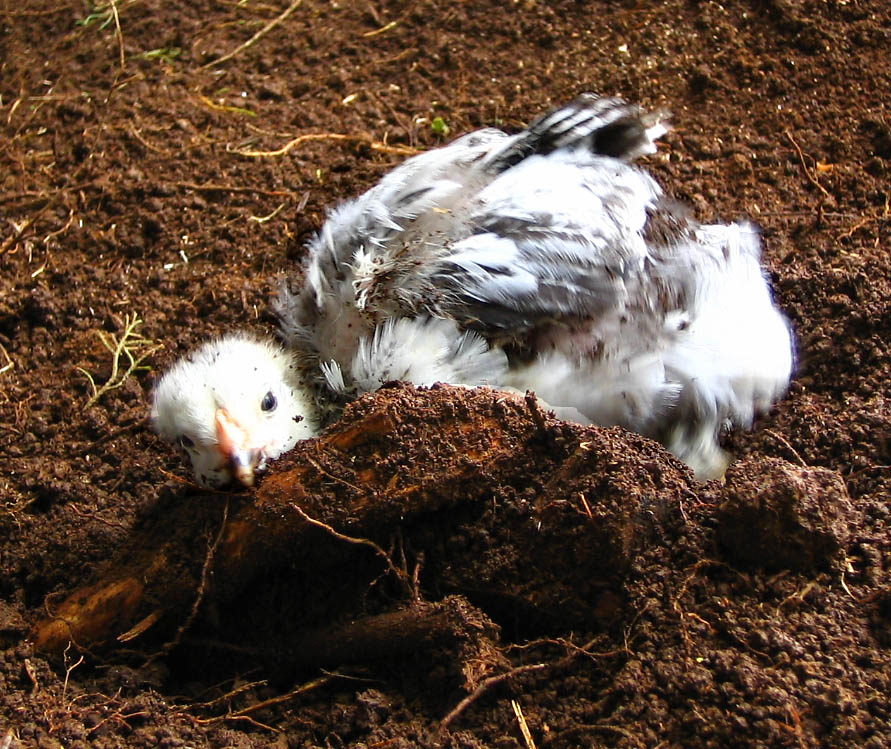
I have strong memories of Light Brahma as a young pullet. She loves dust bathing. I watched her roll her eyes in bliss when she had a chance to dust in dirt at 4 weeks old. Around mid-March 2006 we moved all the young ‘uns from the brooder house on our neighbor’s land to the new chicken coop on our land. How clean her feather toes are at 4 weeks old!
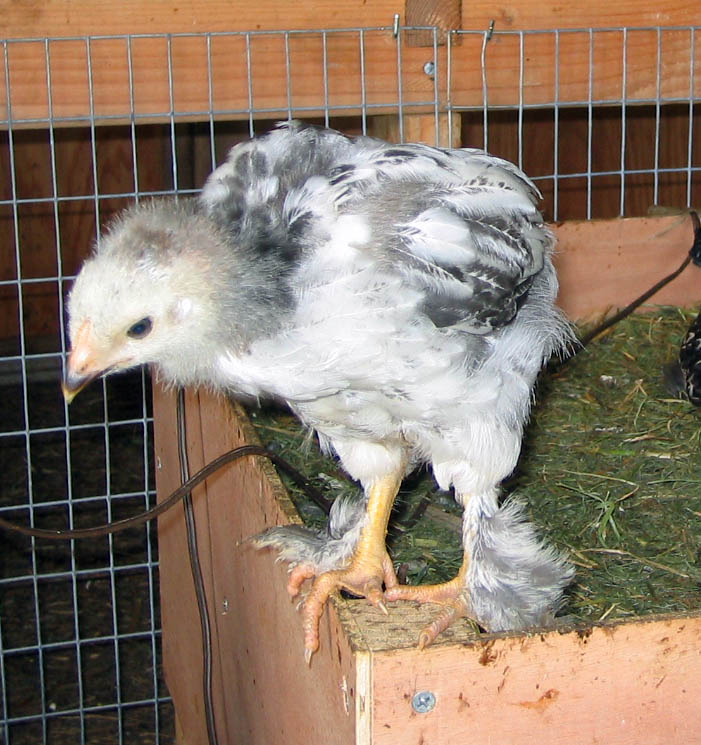
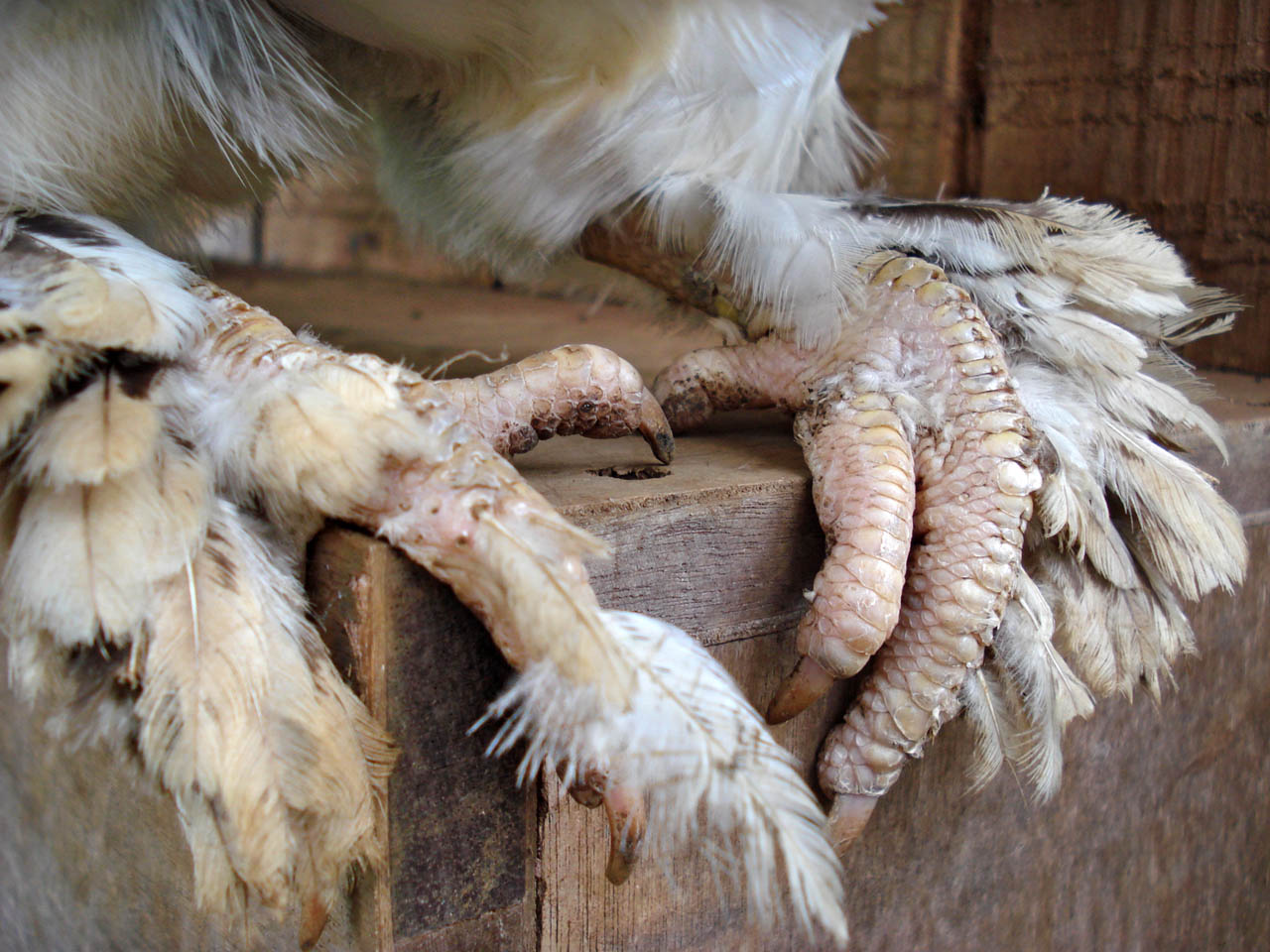
She’s special because of the feathers on her shanks and toes. She has learned recently to walk gingerly [almost reluctantly] onto my outstretched palm if she wants to nibble at some cracked corn and not compete with another hen. Her pecks are very gentle and not at all greedy like other hens.
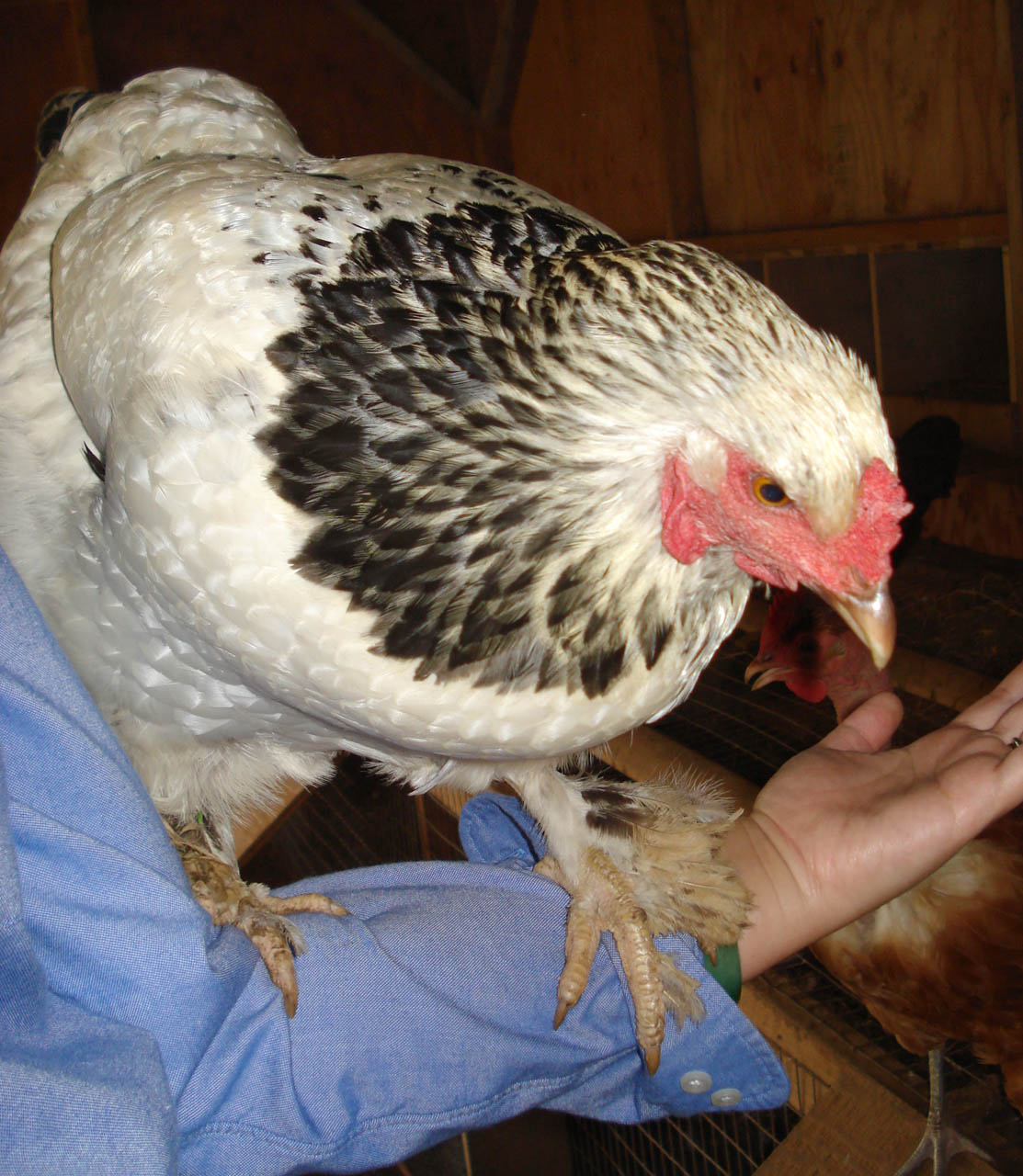
where's the cracked corn?

She’ll remind me to feed her some more cracked corn with a very firm flick of her beak if the corn happens runs out on the palm of my hand. I think she learned how to walk onto my palm by watching Ophelia, a Barred Rock hen, boldly jump from the ground onto my arms for cracked corn.

A close-up of her head reveals she has pea comb, an asset in freezing, cold weather. I was lucky to capture a macro shot of her feather shanks. I realize it’s a scary shot of the dirt around her toes and the “scaly Skeksis of it.” Fortunately, in Ahualoa’s mild climate, Fuzzyfoot would never worry about freezing temperatures. She worries about where to find her next nibble of cracked corn.
Tea pests and diseases

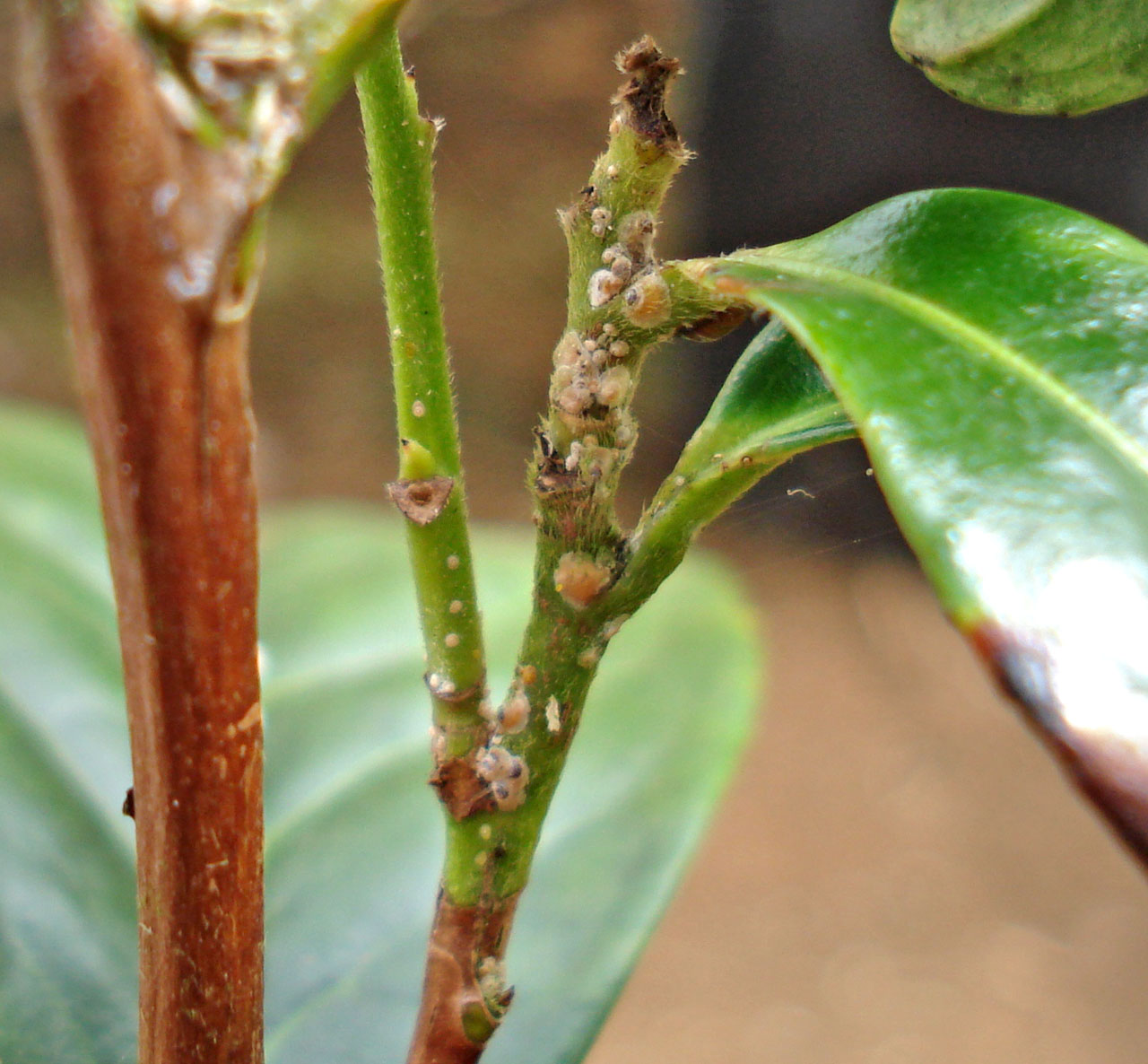
I took some pictures today and wrote descriptions of what’s been afflicting many of our young tea plants in the greenhouse. Taking macro shots with a 7 Mpixel camera gave big, scary looking images of something horrible attacking my plants. The pictures are now in the tea notes (scroll to bottom of page) and here are two of them:

Major Yacon Planting

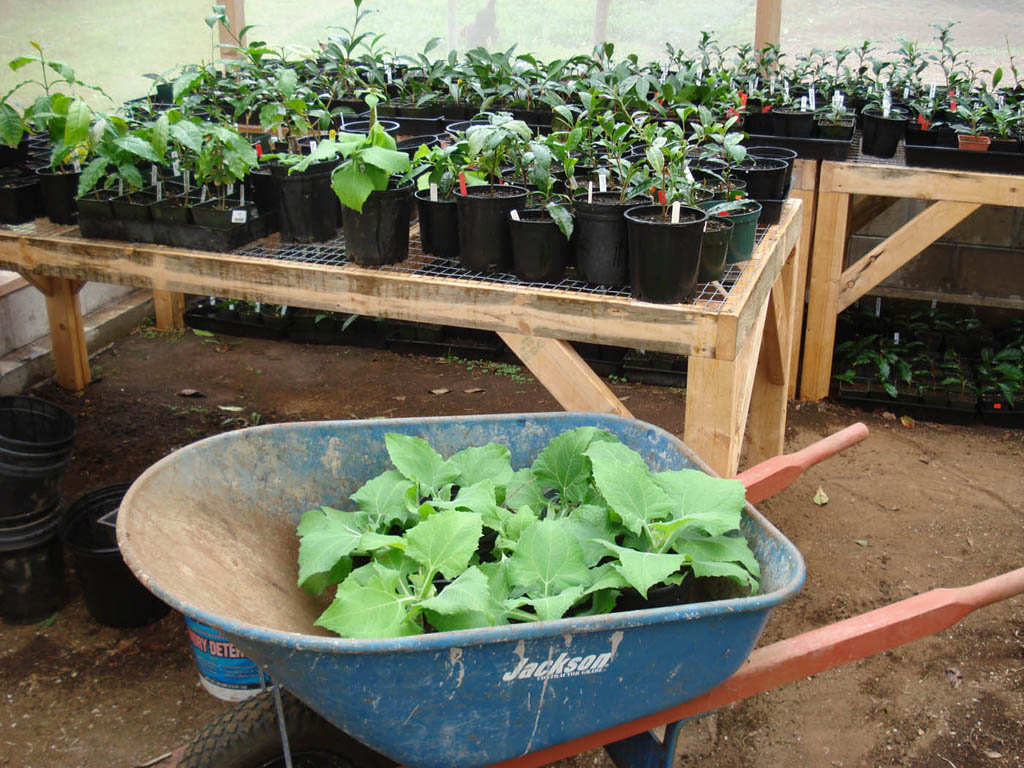
There isn’t much happening with our tea right now. The baby tea plants haven’t grown a bit in the past 2 months, they seem to be on strike for “winter”. So, i’m spending more time on yacon, which seems to happily grow at any time. Here’s the young yacon plants (big light-green leaves) in the greenhouse next to young coffee and tea:

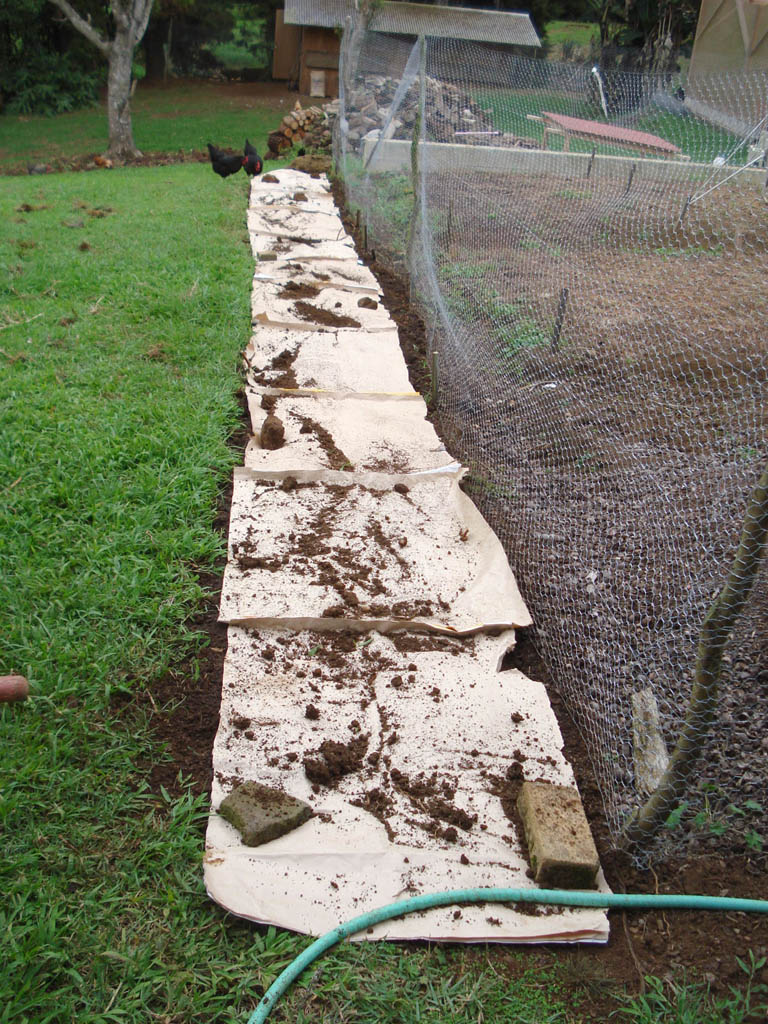
The plan was to put them along the (northern) outside edge of the lower garden. There is no danger of the chickens eating them (i already confirmed that chickens don’t like yacon leaves) but there is a danger the chickens will dig up all the loose dirt around the plants. So, i came up with the idea to stitch (actually, staple) a whole bunch of the used 3-ply paper chicken feed sacks together to make a ground cover, then plant the yacon through holes in the ground cover:

It worked great! So, that’s 10 new yacon in the ground, very exciting!

More harvesting – Jicama and Yacon

January 11, harvested the small row of Jicama in the upper garden. This was totally an experiment. I had bought jicama in northern california and liked it, a crunchy and mildly sweet addition to a salad. I had no idea how it would grow here in Ahualoa. It was planted in June, so it took more than 6 months until it died back ready for harvest. The good news is it made huge, beautiful tubers:

The bad news: these jicama are perhaps too crunchy (one might say gritty), too watery, and terribly bland. Perhaps they have to grow in a drier or sunnier climate to get sweet.

January 18: Harvested the second of the 2 yacon plants in the upper garden. Absolutely incredible – i pulled a total of 55 lbs. of tubers from the ground, from one plant! And they’re delicious. I read that yacon get sweeter if you allow them to rest for a month or more after you harvest, and that appears to be very true. Right out of the ground, they are super juicy but only vaguely sweet. After resting a month, they are noticeably sweeter.

Along with the massive tubers, this one plant also produced enough purplish “planting tubers” to start 40 baby yacon in pots in the greenhouse.

I’ve fed the jicama and the yacon to my family, and the yacon is the hands-down winner. Nobody wants to eat the jicama, although our neighbor Theresa took some to stir-fry.

New broody hen cage for Xmas

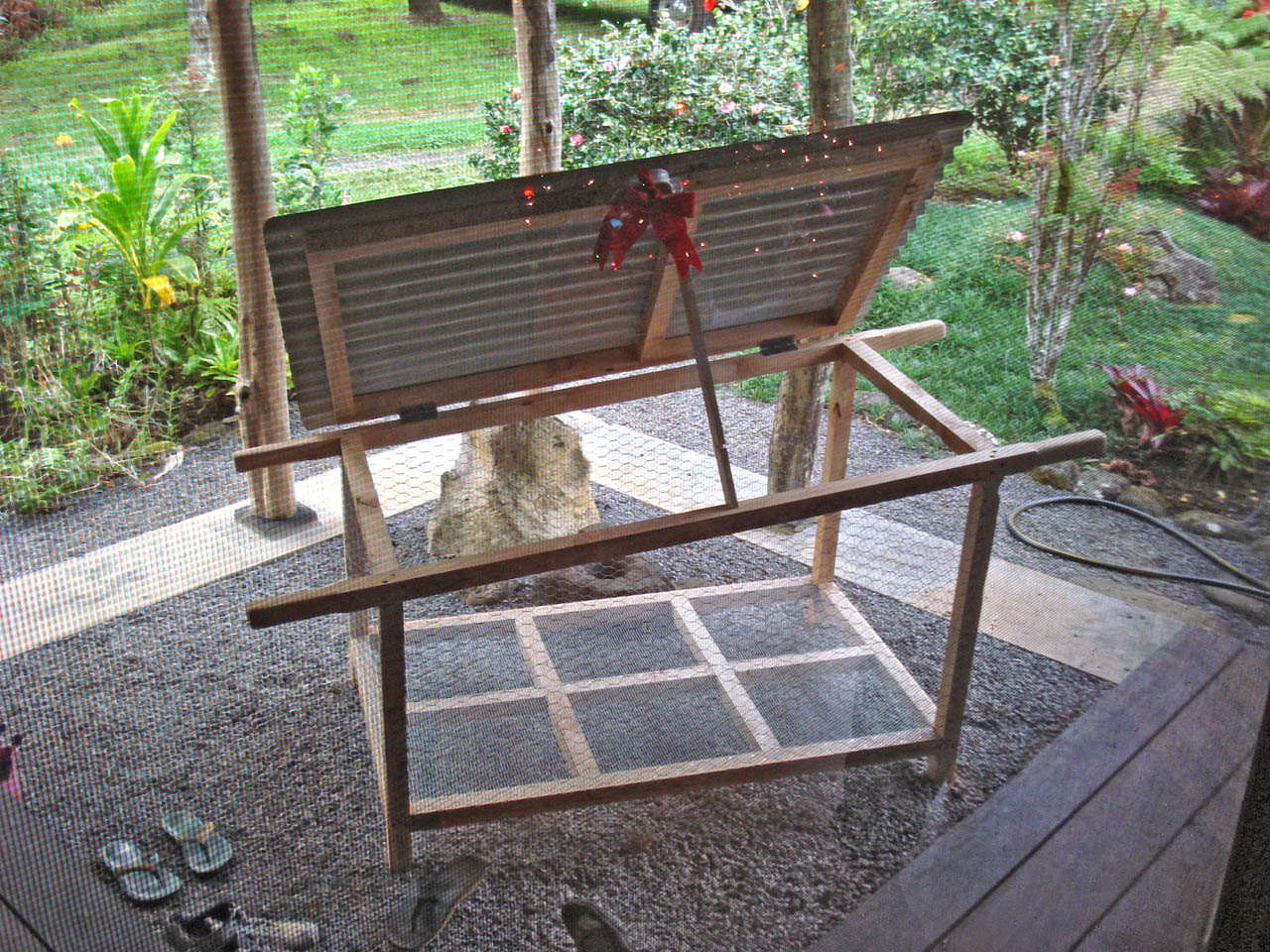
It didn’t quite fit under the tree, but Jim built Deb and i a fancy new cage. For those who don’t know chickens, a hen can sometimes go “broody” which means it stops laying, fluffs up its feathers, refuses to leave the nest, growls at you if you remove it, then runs immediately back to the nest, day or night. This is normal chicken behavior when it’s time to set on some eggs to hatch them, but it’s not useful when you’re trying to produce eggs!

A “broody cage” is for isolating a hen from the rest of the flock (and the nests) until it stops brooding, which can take a few days.

This new cage is lifted off the ground – cool air under a broody hen helps it to realize it’s not time to brood – and it’s got comfy handles for opening/closing and carrying around. Deluxe!’