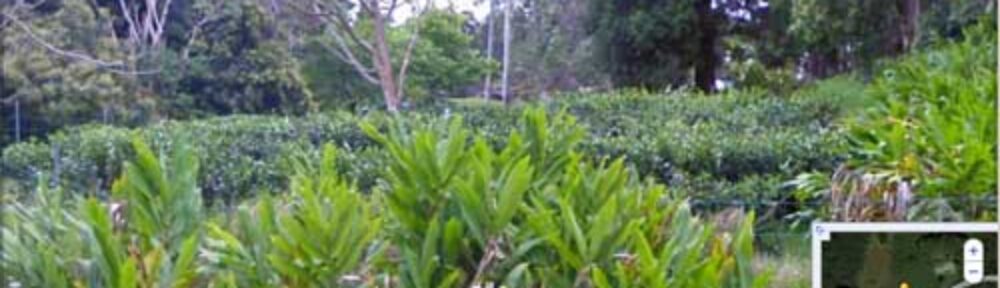
Last time i wrote about cuttings, i concluded that there are many other ideas to try, which might have a better success rate. Today, i finished setting up a major new test, with 6 different combinations, in a shade structure very much like the Mealani paper describes.
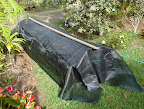
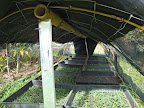
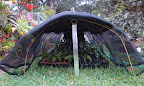
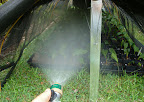
I made the structure out of scrap metal, some bamboo from the land, a bit of hog wire, twist ties, and shade cloth. It is around 10 feet long. Mealani said 80% shade cloth, i had 55%, so i added a stripe of solid ground cloth to the top, to get the necessary darkness. I didn’t go through the trouble of buying and installing mist-irrigation tubing, so for now it will have be misted by hand, every day.
Going out into the tea field, i found that a hundred plants needed major pruning, so there was lots of branches for cutting material. There was even two buckets left over, and more plants in the field that still need more pruning.
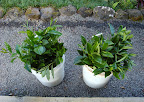
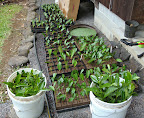
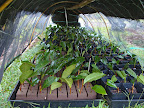
Three different media: oasis cubes, potting mix, and a topsoil/manure/potting combo. Two different dips: Dip’n’Grow, and hydrogen peroxide. That’s 6 different combinations, times 2 cultivars (Beni/Bohea, Yabu/YM) is 12 trays, a total of 424 cuttings. Deb helped to dip and stick the cuttings, all together it took around 5 hours to prune, clip, dip and stick.
I also bought a small gadget which records and logs temperature and humidity. You then bring it to a computer with USB and see the data. I’m curious what the conditions are going to be like inside the shade structure, especially in the hot afternoon and cold night.