Soil tests

I mentioned before i was suspicious of some trouble with my roughly finished compost. I did the classic agronomic test: made a number of pots and planted corn. Started 4/7, three weeks ago. Eventually i will pull them up and do quantitative measurement of the biomass grown, but for now i can already do a little qualitative guesswork:

A,B,G: plain topsoil, as a control.
C,D: 50% topsoil, 50% compost.
E,F: 100% compost.
H: Rich, dark results of feeding manure to earthworms.

Some tentative conclusions:

  • It all grows quite well. My topsoil is pretty good.
  • The corn in the 100% compost looks more yellow, less green. It must be that something is lacking, either the compost isn’t sufficiently broken down or it lacks some nutrient(s).
  • The 50-50 blend is doing slightly better than straight topsoil, so the addition of compost is overall a benefit.
  • H looks great. Plants just love pure worm output. 🙂
Tea trouble: yellowing

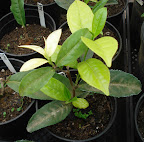
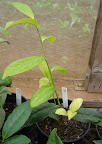
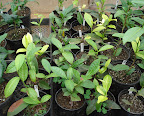
After my last post about increasing success in the greenhouse, i noticed a big problem: leaves turning yellow, in some cases so pale they are almost white:

Some possible causes:

  1. too much water, not enough water
  2. too much nitrogen, not enough nitrogen
  3. some other nutrient lacking which is needed to make chlorophyll

Interestingly, it is almost exclusively the YM (Yutaka Midori) that are experiencing the problem.  Yabu and Beni that were potted at the same time in the same soil, and the same water/fertilizer treatment, are fine.

I figure i can rule out 3, and since i’ve been giving them all plenty of water and fish emulsion recently, i’m gonna guess that it’s probably 1-2 “too much”.  So, i’ll be holding off some of the water and all the fertilizer for my YM for a while.  Hopefully they’ll survive; the palest leaves are likely to die and fall off, maybe taking the whole plant with it.

Tea trouble: tree roots?

My tea in the field is growing very irregularly, and i can’t figure out why. Some plants are healthy and growing great, others not. In some cases, it is the same cultivar, planted at the same time, in the same soil and the same amendments – yet one plant is booming and the one next to it is barely alive.

I got one possible clue, when i dug up a failing tea plant, to replace it. The soil around the failed plant was totally full of tree roots. I’m not sure exactly what tree it is. There were a couple mystery trees in this field that i chopped down before planting, and a koa and an avocado which are in the same field but probably too far to be responsible. Take a close look, the failed tea was completely choked:

I didn’t think tree roots would be a problem, because i’ve heard of tea being “shade grown” in other parts of the world.  Maybe the species of tree matters.  Maybe these particular tree roots are allelopathic to tea plants.  Maybe i didn’t dig a big enough hole when i planted in this spot the first time.  Maybe the roots of the dead stump nearby are still growing?  Or maybe it’s not the roots themselves, but something related or indirect like an elevated population of nematodes due to the dead tree’s roots.  Agriculture is so complicated with so many unknowns!

Tea Update

Tea planting continues slow and steady. We’re trying to keep costs low, only buying a few rooted cuttings on occasion. There are around 250 plants in the ground.

My greenhouse tea are doing better than ever before. Here are a few things i found, over the past year, that seem to help them:

  • Spraying dilute neem oil (“bio-pesticide for organic farming”). Aphid and scale problems seem to be gone.  Even the mite-infested cuttings i got did not spread or cause any trouble.
  • No compost in the potting mix. For whatever reason (pH? tannins?) the baby tea doesn’t like it. Dunno what’s up with my compost, i will be testing it.
  • More fertigating, primarily with dilute fish emulsion, and now also a little kelp meal. Apparently over-fertilizing is less of an issue than under-fertilizing – you can lay on the nitrogen, even for baby tea plants.

This is how my rooted tea cuttings looked a while back, when they were just potted:

Six weeks later, half of them are big and ready to go into the ground.  That’s better growth than i’ve ever had before.

Spring Farm Update

Aside from the usual spring planting, here are some things that have been going on at the farm.

  • I dug several new beds above and outside the upper garden. In addition to the usual taro and veggies, i have planted some “hull-less” popcorn and a large bed with two different kind of peanuts. I bought the heirloom peanut seed from organic farms i found on LocalHarvest.
  • When all the stores were out of Azomite (which we use to add all the minerals our soil lacks) i got a bag of Kelp Meal instead. Expensive, so i use it sparingly, but seems like great stuff.
  • I ‘activated’ a gallon of EM and have started a number of experiments with it, seeing if it affects anaerobic composting and whether it helps to “balance” the rough compost. In addition to the anaerobic tests, there are number of pots with 5 corn plants each, with varying amounts of finished compost and EM.
  • On a tip from Tom Baldwin, i am now looking for some Azolla (aquatic fern) as a way to grow nutritious feed for my chickens.
  • I gave a talk on biochar at a local gathering of farmers, a seed exchange/potluck event held in Honokaa every other month. Lots of other biochar news, but that’s another blog post..
  • I gave a talk on How To Eat Local, at the Waimea library. Only a few people showed, but the talk went well. I hope to give the talk to a big audience at some point.

Here are the new upper beds as of a couple weeks ago. That brand-new bed is now full of peanuts: