Here’s an experiment at posting a video on YouTube…
Hmm, embedding it doesn’t seem to work well, but i can link to the video.
Our chickens love ear of corn
Reply
Here’s an experiment at posting a video on YouTube…
Hmm, embedding it doesn’t seem to work well, but i can link to the video.
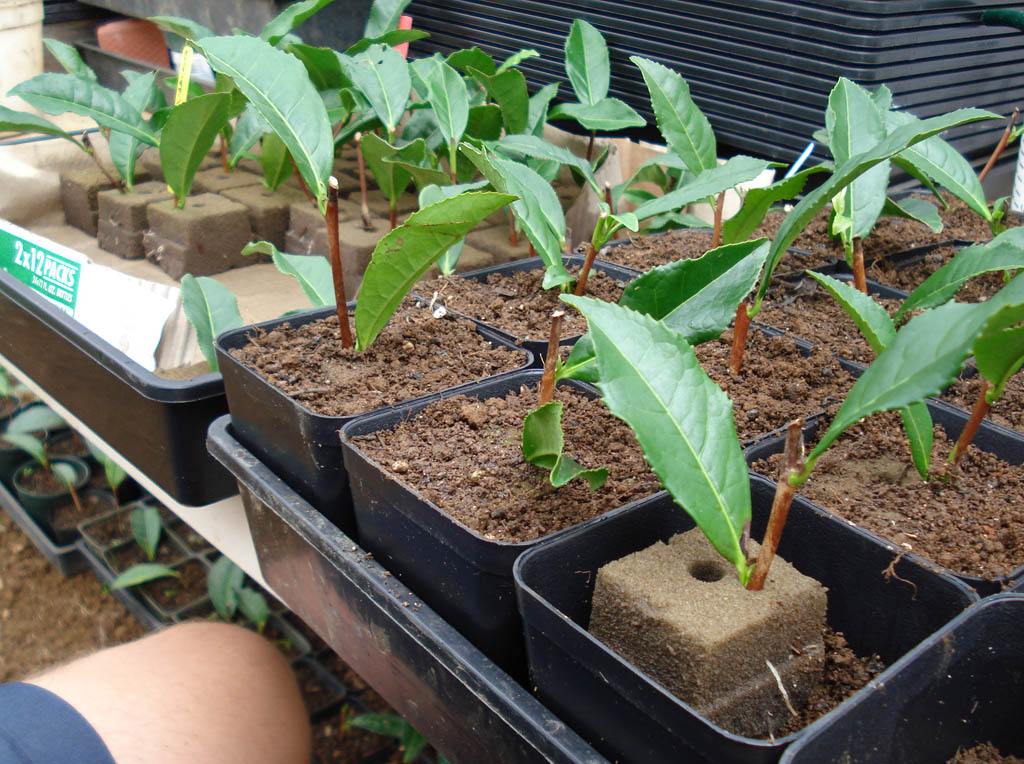
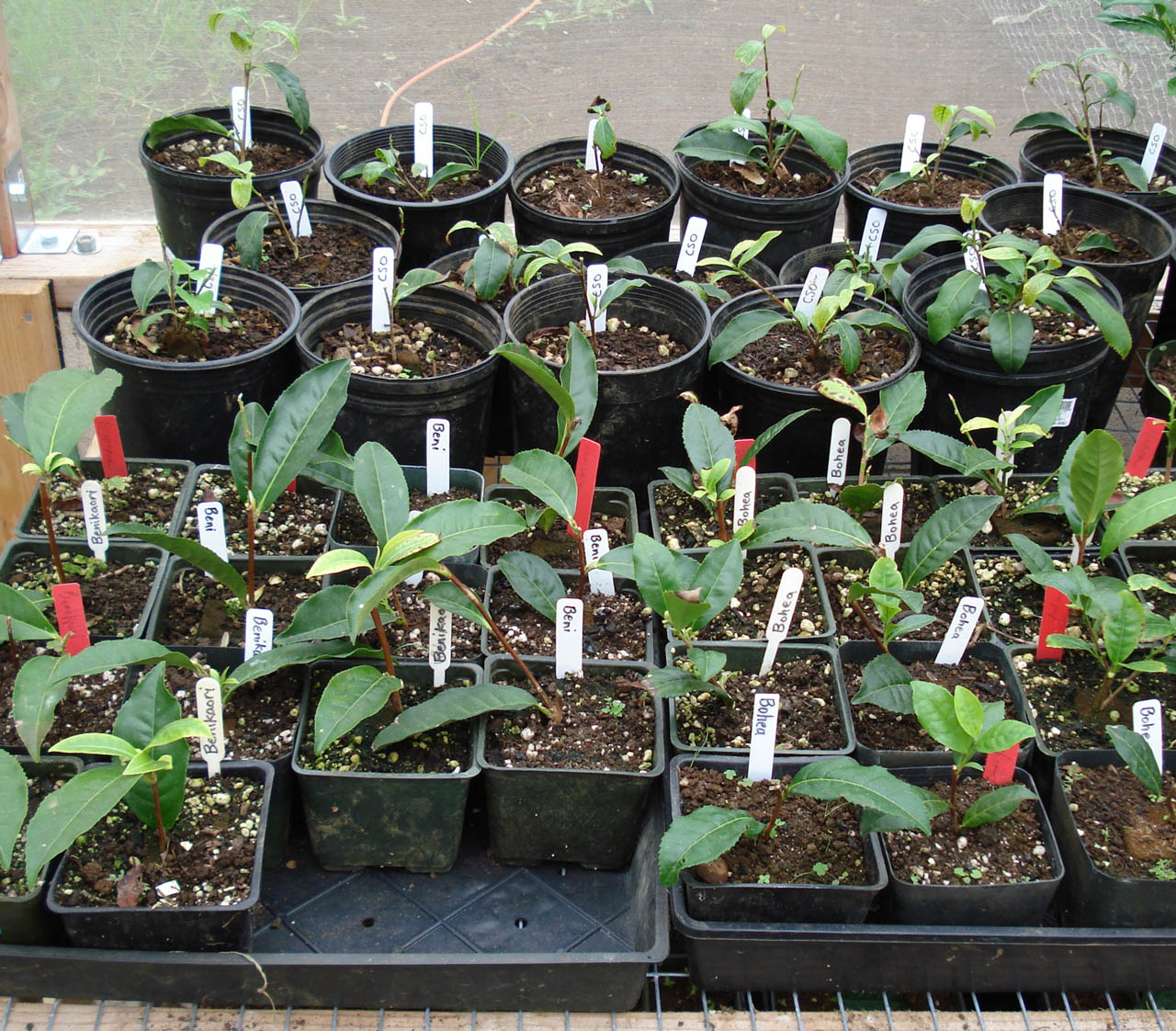
Jim went to Hilo this morning and picked up another batch of rooted tea cuttings, from the USDA, rooted by Aileen Yeh. Look how pretty they are! So green and strong and healthy. Aileen does great nursery work.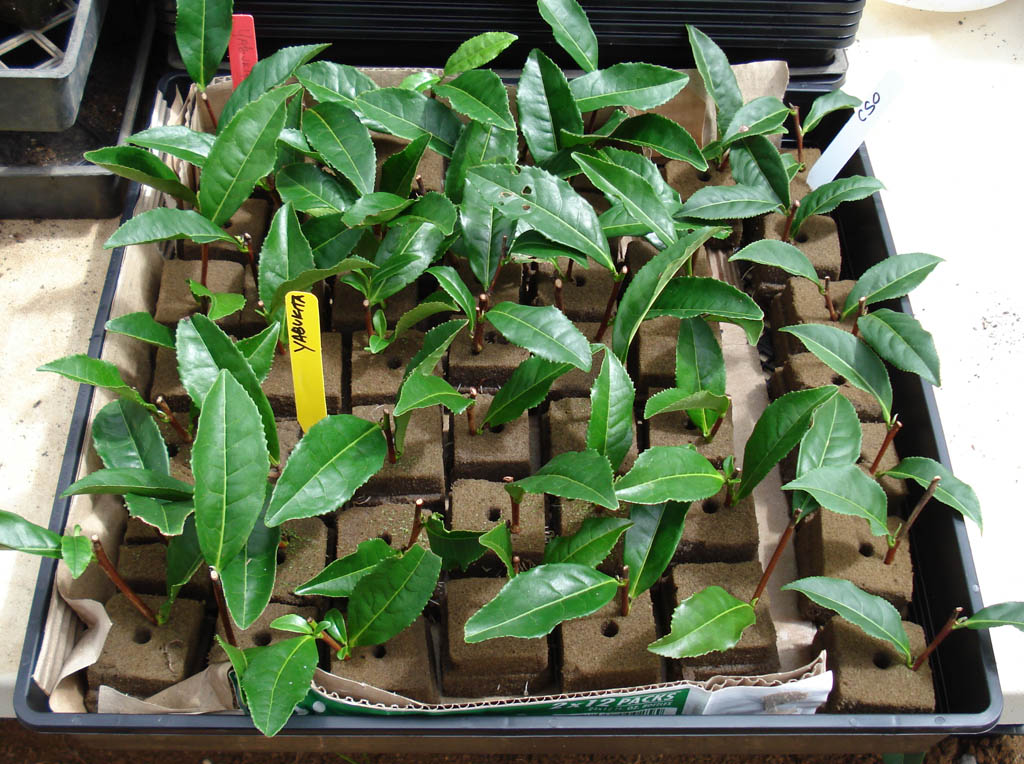 The ones on the left are CSO, which are a special kind from Taiwan which is more difficult to grow but makes an Oolong with a good reputation. You can see the leaves are smaller, less shiny, and more bluish:
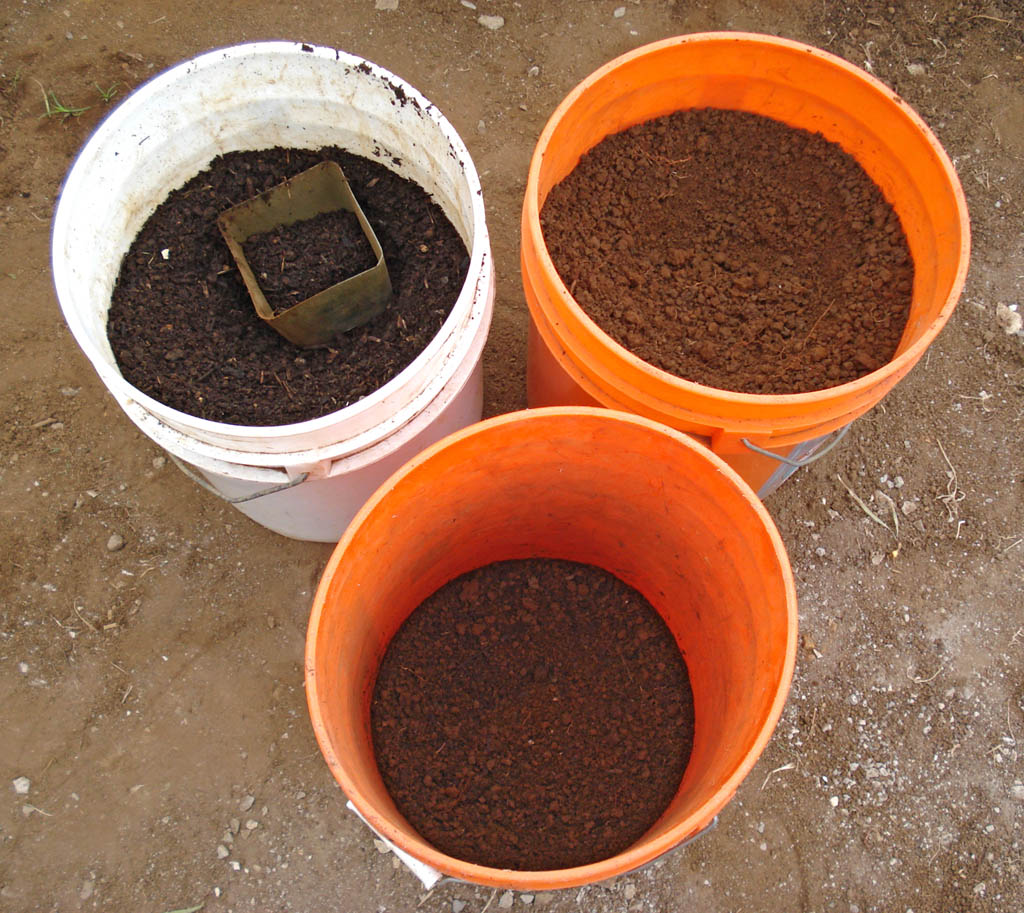
They are delivered in little sponge cubes. There is a lot of different (conflicting) information about what potting soil to use for tea. The Indian textbook (Tea Cultivation : Comprehensive Treatise) says to use the “clean subsoil” of the site they will be eventually planted. The nursery professionals say to use normal commercial potting mix. Other people caution against using rich soil, apparently the little plants do better if they have to work harder! Here in Ahualoa we have acidic soil (which supposedly the tea likes) with very little nutrients. I just can’t see using this soil directly, so i mix it with some of our rich dark home-made compost. I used to mix 1:1, now i mix 1:2 compost:soil. The buckets have, top left: our compost, top right: our local redish acidic clay soil, bottom: the mix.
Deb came across a very cool, short New York Times article: ‘From a Long Tradition, Small Sips Quickly Brewed.‘. Unfortunately, it’s not fully online unless you’re NYT subscriber, so i dug around to find another blogger who quoted the full article. The author Harris Salat has an entry on his blog “He ate well” with the pictures.


It would be great to produce some tea someday that deserves such a passionate brewing.
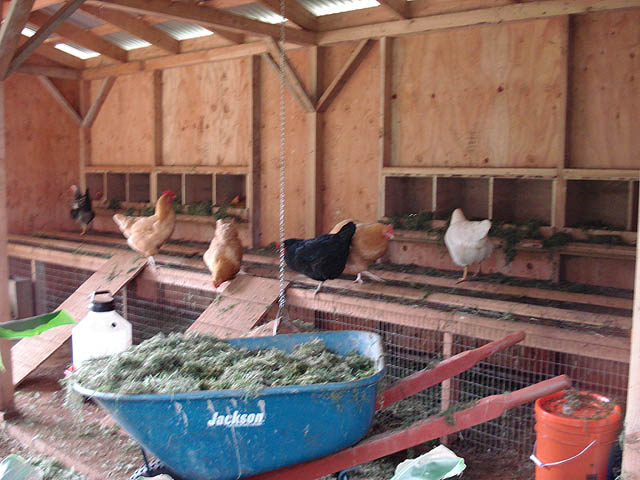
I’ve made a page for our egg farm today. It’s a nice place to see pictures of our happy chickens 🙂
We’re trying to find any alternative to importing chicken feed from the mainland. Mainly, i’m trying to find anything i can grow here in Ahualoa that can be fed to chickens!
Besides sunflowers, my other experimental crop this year was fava beans. I had found some online reference saying that in some places, they are grown as chicken feed. And, supposedly, the climate here (wet, and never gets too hot) would be OK. So, back on May 25, i planted a 9m row of favas along the edge of the lower garden. On June 10, i planted a second row of 5m along the upper garden.
They didn’t do too well 🙁 They grew slowly, got blown over often by the wind, were attacked repeatedly by aphids, and often died back (then shot up new shoots from their base). Here’s a picture of the lower row, today, and a closeup of the healthiest plants:


Even at 3 months old, they are not showing any signs of producing beans. They appear to be using their energy just to stay alive. The tallest are barely 3′ high. The row in the upper garden did even worse:

Today i sadly put the upper row out of its misery by pulling it up for compost.
Considering that we grow all sorts of other vegetables here very well (chard, kale, cabbages, lettuce, string beans, soybeans, corn, carrots, beets, much more) there must be something about the fava beans that just wasn’t happy. Alas.
Recently i mowed the lawn and gathered the cut grass. Cut grass is useful, both as bedding that makes the chicken coop smell nice, and as a green matter input to the compost pipeline. This makes for happy chickens and nice organic compost for our eventual tea plantation:

Now, there are many people that say a lawn is a terrible thing, and they’re mostly right. A quick web search turns up “green lawns have to be maintained through use of chemicals that can pollute the groundwater and kill beneficial plants and insects; Americans spent $17.4 billion a year on their lawns; it the largest irrigated crop in the United States, consuming 50-70 percent of U.S. residential water…” You get the idea.
Well, those folks aren’t talking about the Wet Side of the Island of Hawaii! Here, lawn is not a foolish waste of environmental resources. It is a defense tactic against the ever-incroaching wall of Kikuyu grass (brought to Hawaii from Africa by cattle ranchers), which rapidly grows to several feet high, making land impassible and unusable. A lawn here consumes no chemicals and no water. However, mowing it provides a very large quantity of useful cut grass.
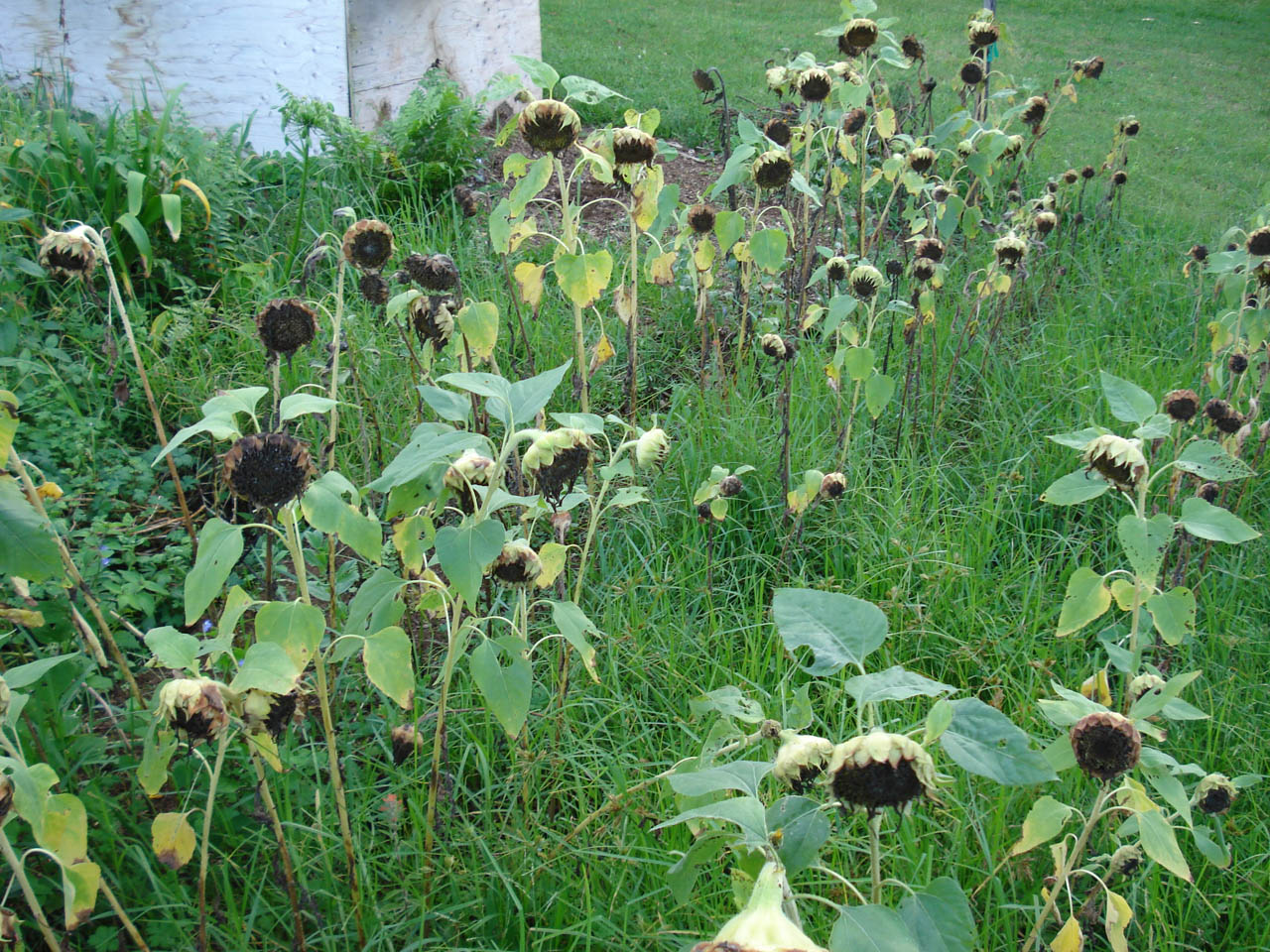
One of the ideas i wanted to try out for feeding our chickens was sunflower seeds. People told me they are very easy to grow. So, back on June 16, i planted 15m of sunflowers (3 rows of 5m each). I dug troughs in the ground, filled them with compost, put plenty of soaked sunflower seeds in the ground, then thinned them as they grew. They grew up quickly, made beautiful flowers, then at 3 months of age, they drooped and turned dark. Finally yesterday i gathered the heads. The biggest one (below) wasn’t too big.
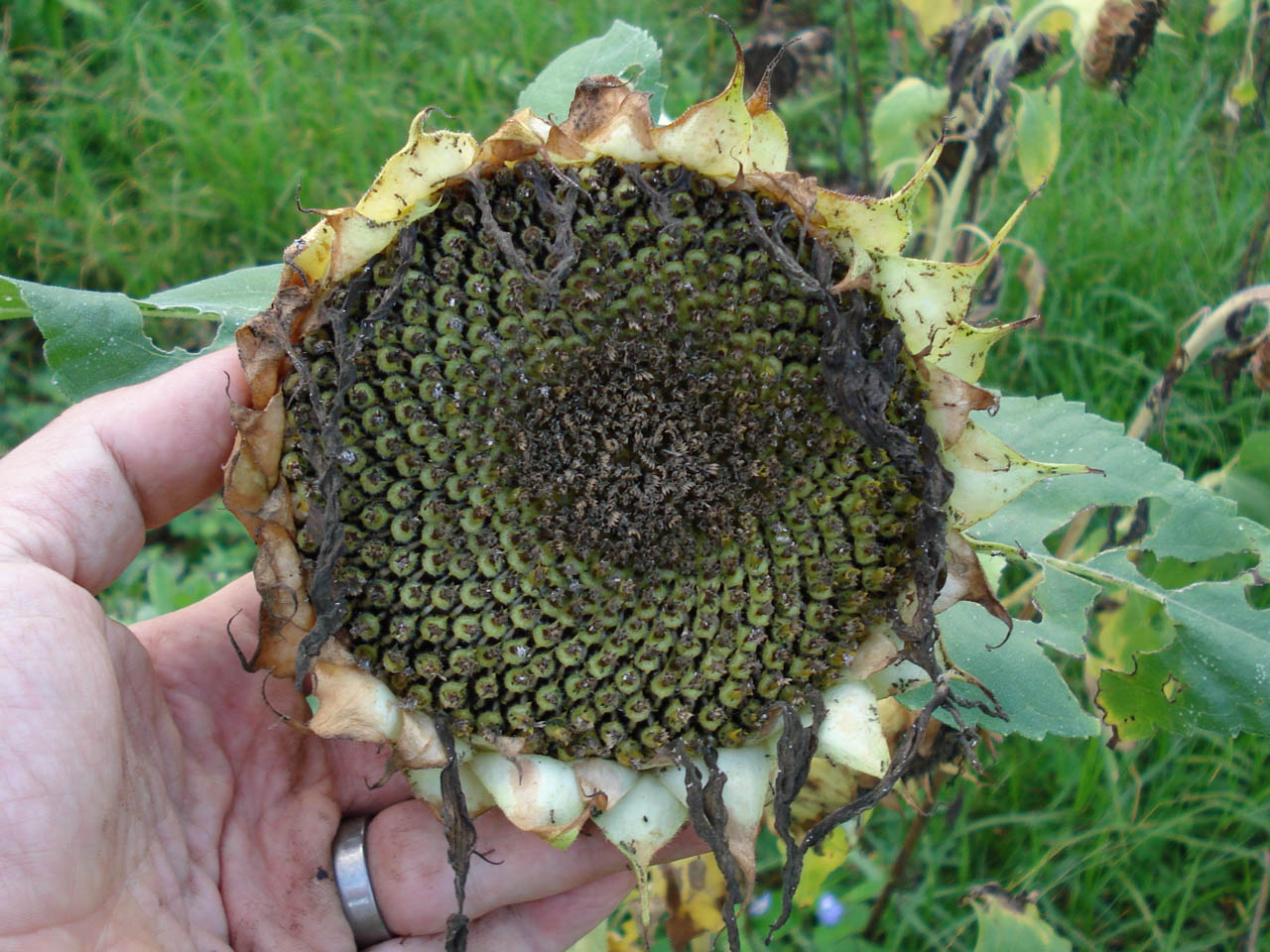
Most of the heads are small and immature. Trying to get seeds out of them, there are only a few usable seeds at the outer edge:
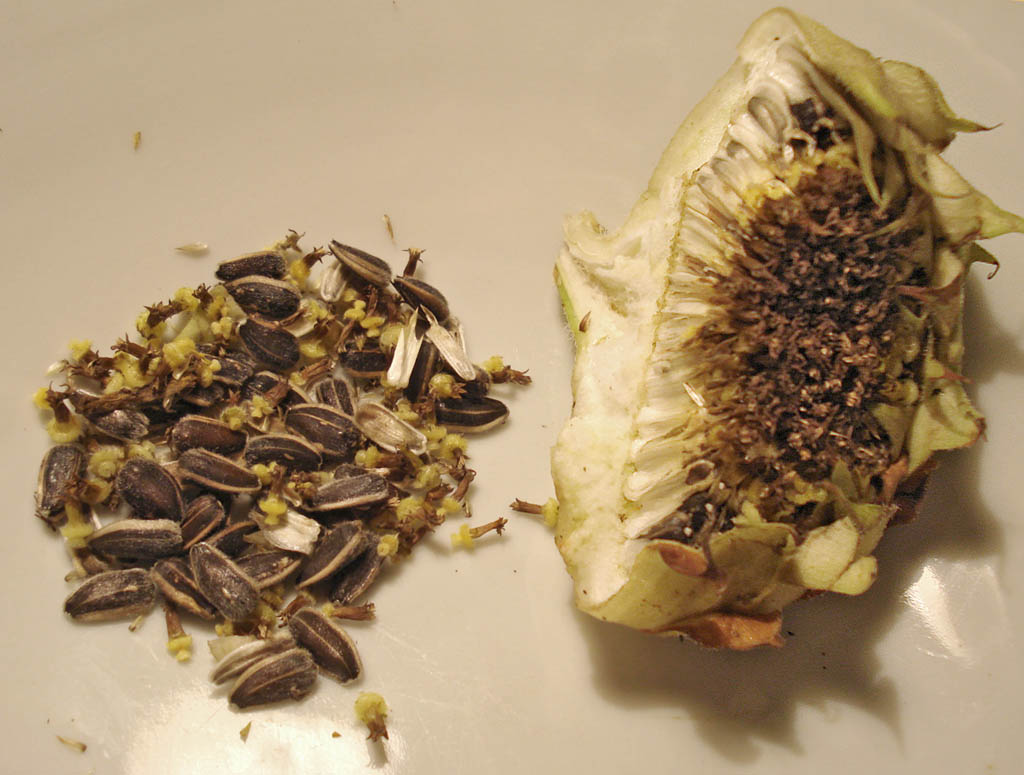
I suspect that my batch of sunflowers will barely produce enough seeds to replant the same rows. (Online resources say that i must wait until the heads are completely dried out before collecting the seeds. Otherwise, they are hard to remove. So, i won’t know how many seeds i got until later.)
This was not too successful as a way to grow chicken feed. If i tried it again, perhaps i could:
Last night a got a call from Takahiro saying he had a few tea cuttings for me, from his own plants! This is really wonderful and unexpected. I quickly dashed over to pick them up, and he told me a little about the cultivar, Benikaori.
I had tried looking for any information about it online, but found none. The USDA Tea pamphlet says only “in Japan [..] used for black tea production”. That’s mysterious, as Japan does not drink black tea – why would they grow it? Takahiro explained that after WWII, when Japan was economically devastated and looking for things they could export, ‘Benikaori’ was developed as a cultivar that could be grown in Japan and made into good black tea for export. It’s still pretty mysterious how it ended up being grown in Hawai’i 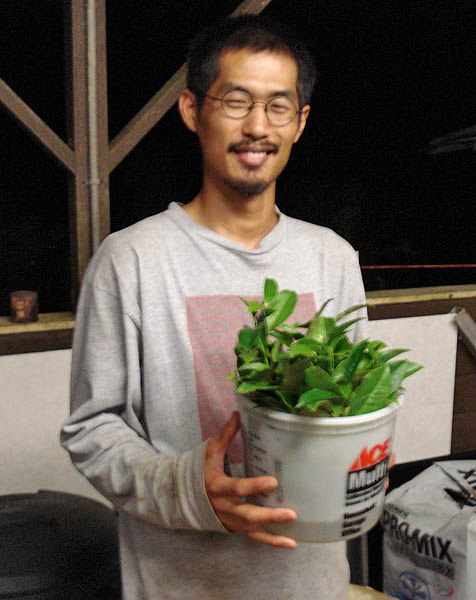 (which has a really different climate).
In any case, Takahiro gave me a bucket:
I managed to get 86 cuttings from that little bucket! He said that even cuttings from the totally green tips of the plant can sometimes root, so i extracted every bit of material i possibly could.
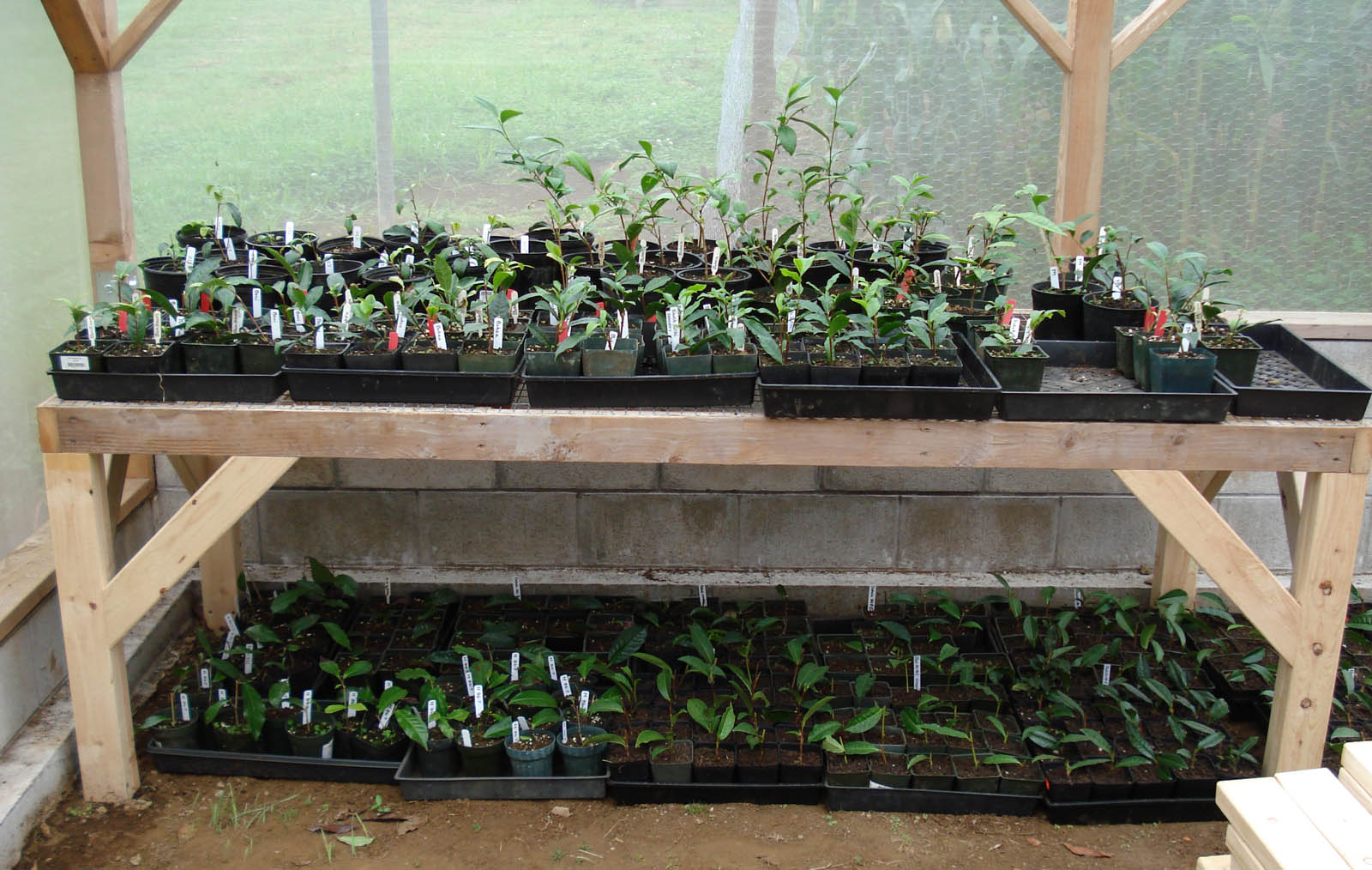
Here’s a snapshot of all our little plants. The ones on the table are rooted, and the cuttings that haven’t rooted yet are under the table where it’s nice and shady:
And a closeup showing how the CSOs (in the back) aren’t doing as well as the other, younger plants:
Today was another good day of potting. Jim went to Hilo and picked up 200 more little pots for me ($.20 each at Garden Exchange, they fit 5×5 to a tray). I made 36 more cuttings from Eliah’s plants. All my cuttings are still a long way from rooting, though.
I did a count. Here is how many little plants of each tea cultivar that we’ve got actually growing:
Benikaori 15, Bohea 39, CSO 16, Yabukita 29, Yutaka Midori 13, Assam 1
That’s 113 plants, although many of them probably won’t make it. The CSO in particular are just clinging to life even though it’s been 8 months since they rooted.